
Full Deck Replacement and Rebuild in DuPage County
A full deck replacement means the old structure comes out and a new one goes in. If your frame is still sound, we will tell you, and a re-deck will cost you less.
No obligation and no pressure. We walk the yard, talk through options, and give you a written price.
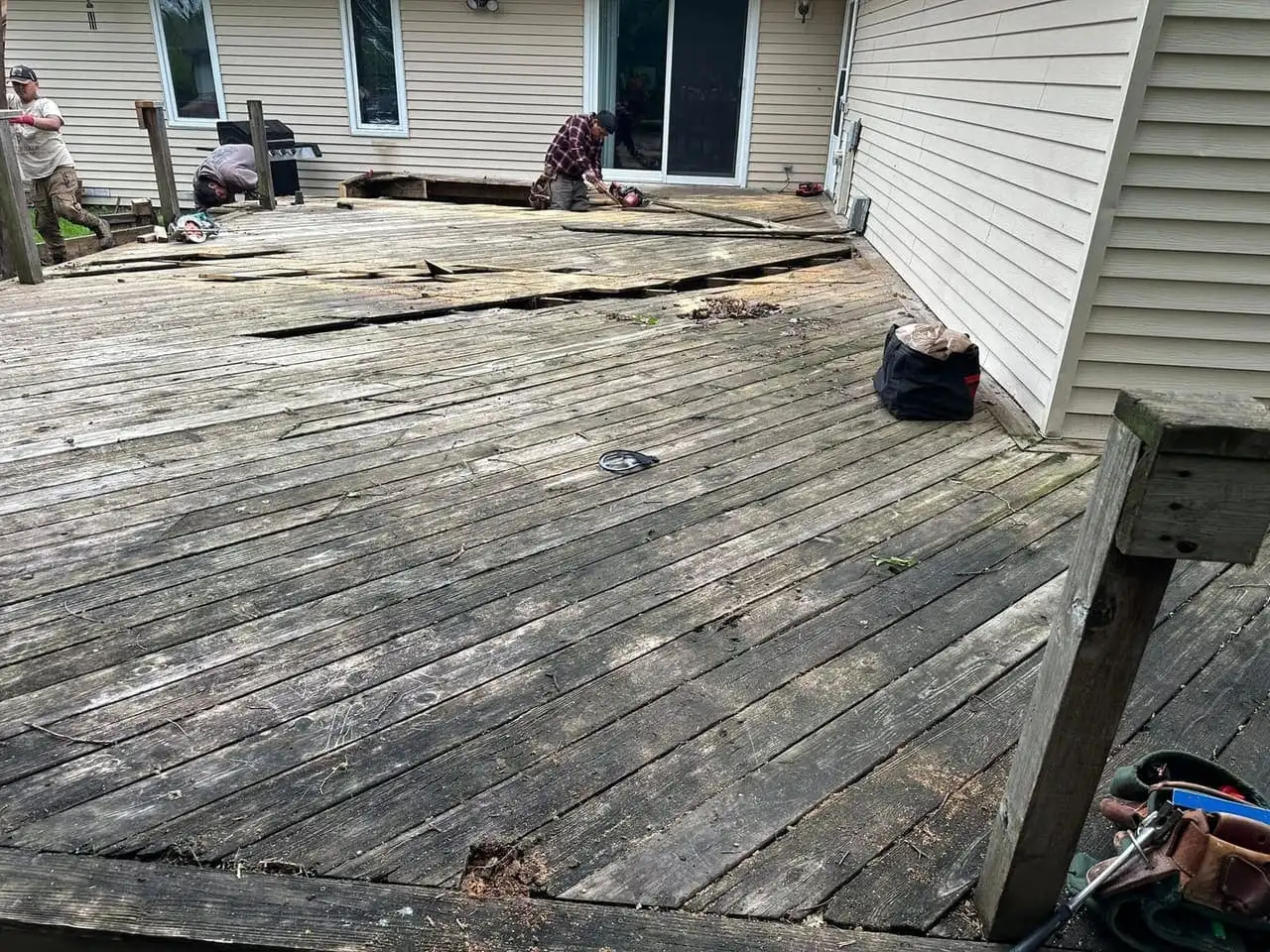
Quick answer
A deck replacement tears out the old structure and rebuilds it, framing and footings included. Budget $30 to $45 per square foot in pressure-treated or $55 to $80 in capped composite, installed, so a 16 by 20 replacement runs about $9,600 to $14,400 in wood and $17,600 to $28,800 in composite. Most take 2 to 4 weeks. If your frame is still sound we will say so, because re-decking costs less. Get a free estimate.
When a deck needs replacing instead of re-decking
Soft posts or a moving frame
If a post is spongy at the base or the deck sways when you walk it, the structure is done. New boards on a failing frame is money you will spend twice.
Tear-out and haul-away included
Demolition, dumpster and disposal are part of the job, not a surprise line item. You do not end up with a pile of old lumber in the driveway.
Brought up to current code
Decks built twenty years ago often miss today's railing height, baluster spacing and footing depth. A replacement fixes all of it and gets inspected.
Replace or re-deck? We will tell you straight
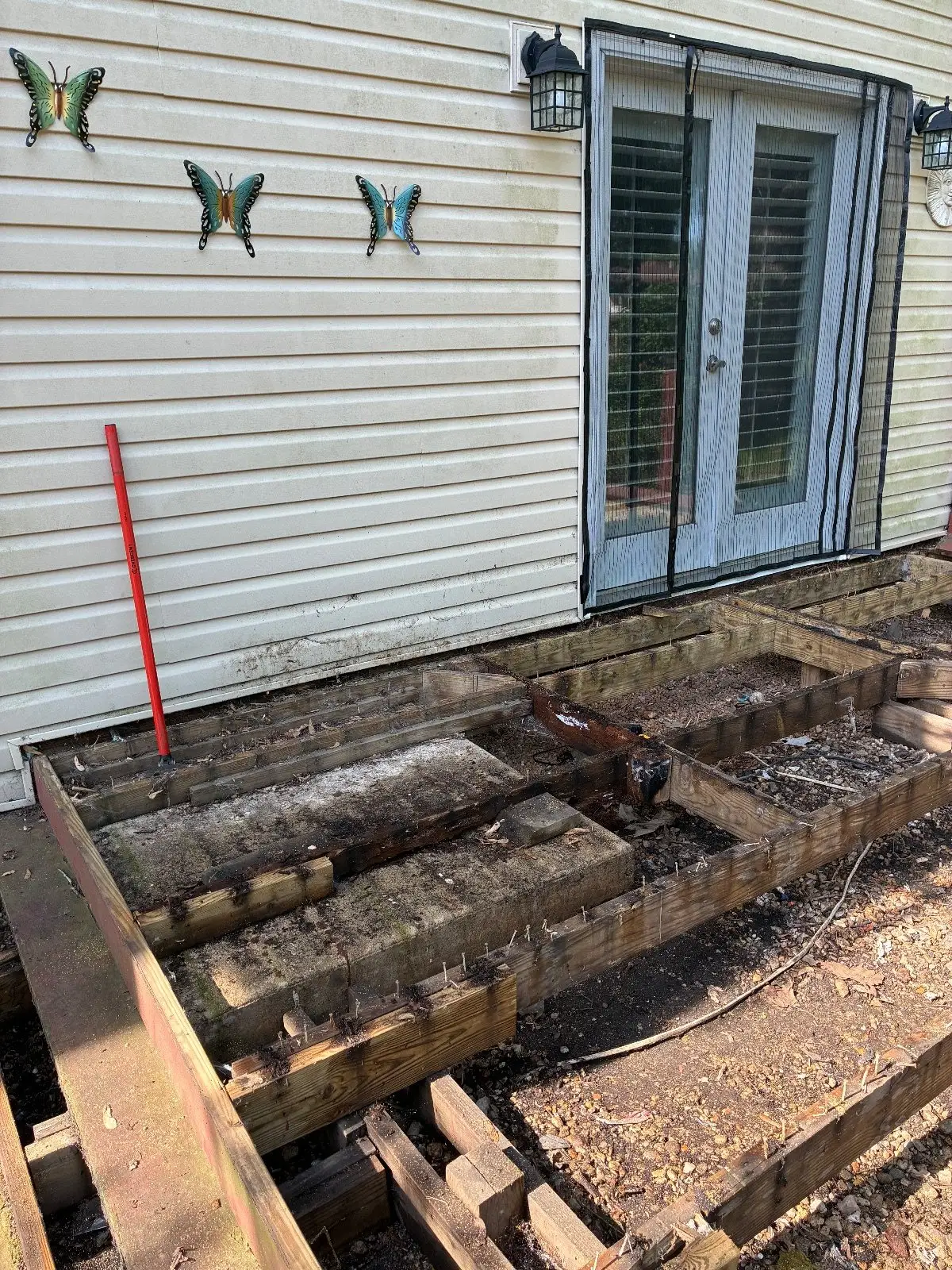
How to tell your frame is done
You can check most of this yourself in ten minutes with a screwdriver and a flashlight.
- Push a screwdriver into each post at ground level. If it sinks in, the post is rotten. Posts rot from the bottom, where they meet dirt or concrete.
- Walk the deck and watch the railing. Sway, bounce or a railing that moves with your weight means the frame has let go somewhere.
- Look at the joists from underneath. Dark, soft or crumbling wood, especially along the top edge where the boards sit, is what the Bloomingdale photo shows. That frame was sitting on a brick base and had rotted through.
- Check where the deck meets the house. Stains, soft siding or a gap at the ledger means water has been getting behind it.
Grey boards and surface splits on their own are usually a re-decking job, not a replacement. Any of the four above is a replacement.
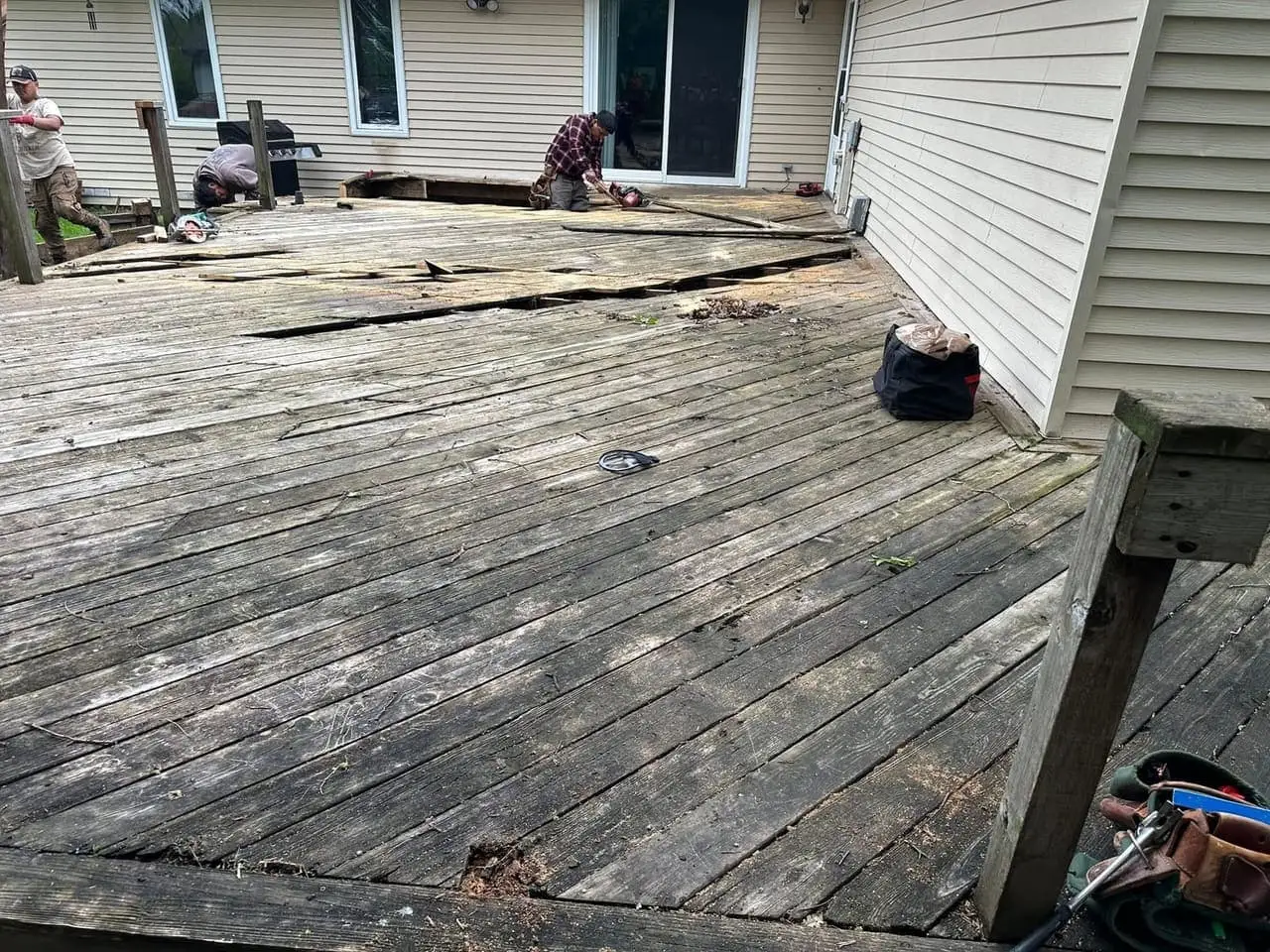
First we look underneath
Every replacement estimate starts under the deck, not on top of it. We check the posts at grade, the ledger where the deck meets the house, the joists and the hangers.
If the frame is sound, we will tell you to keep it. Putting a new surface on a solid structure is re-decking and it costs meaningfully less than a full rebuild. We would rather do the smaller job than sell you the bigger one.
If the posts are soft, the ledger is rotting into the rim joist, or the footings are too shallow, a rebuild is the only honest answer.
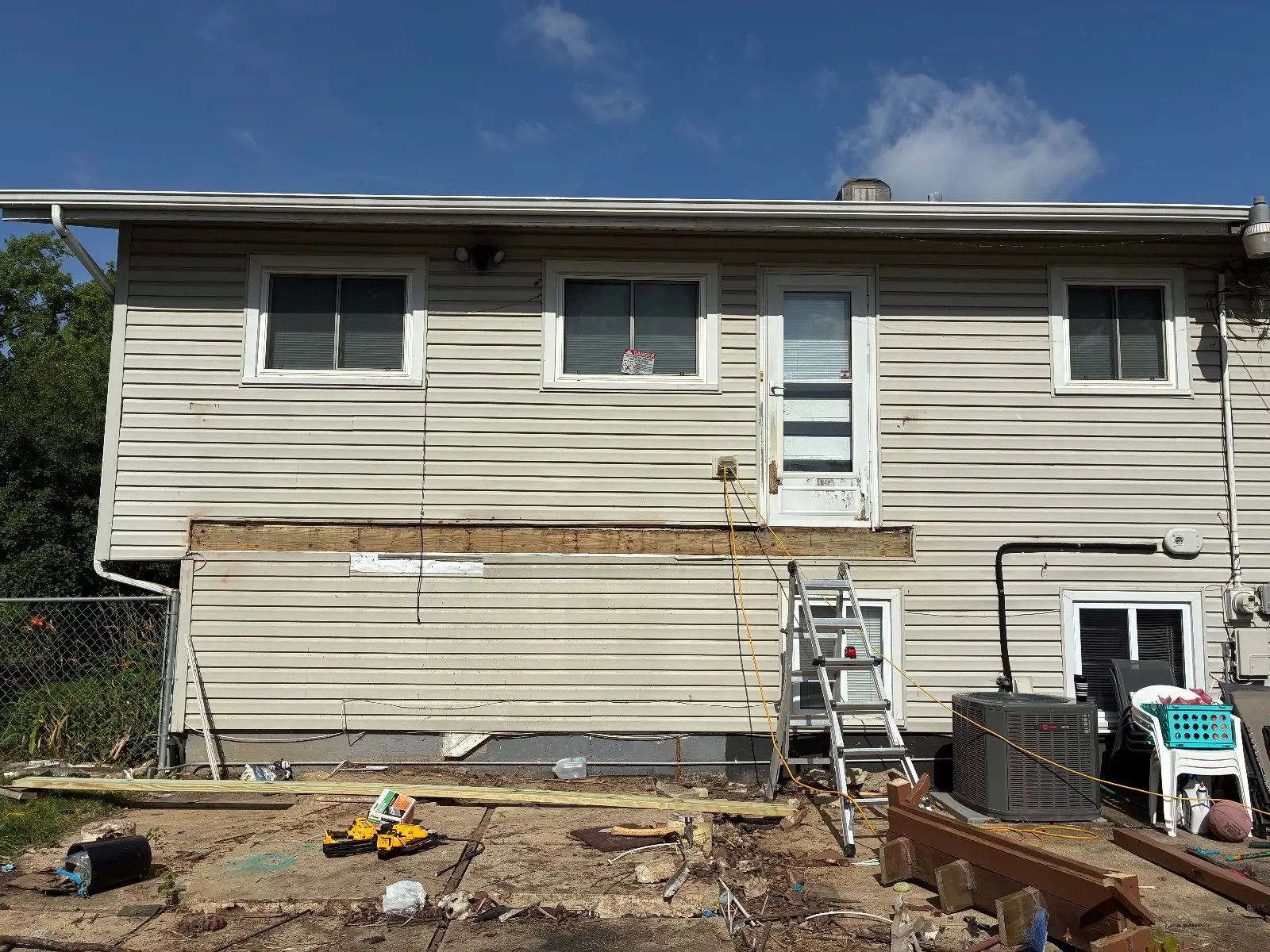
The ledger is where old decks really fail
The ledger board bolts the deck to your house. On a lot of older decks it was nailed instead of bolted, and flashed poorly or not at all.
Water gets behind it, sits against the rim joist, and rots the house before it rots the deck. It is the single most common serious problem we find, and it is invisible from above. The Hoffman Estates photo is what the wall looks like once the old deck is off: that stripe is where the ledger sat, and it is the moment we can see what the water did.
A replacement lets us pull it, look at what is behind it, and rebuild with proper flashing and structural fasteners.
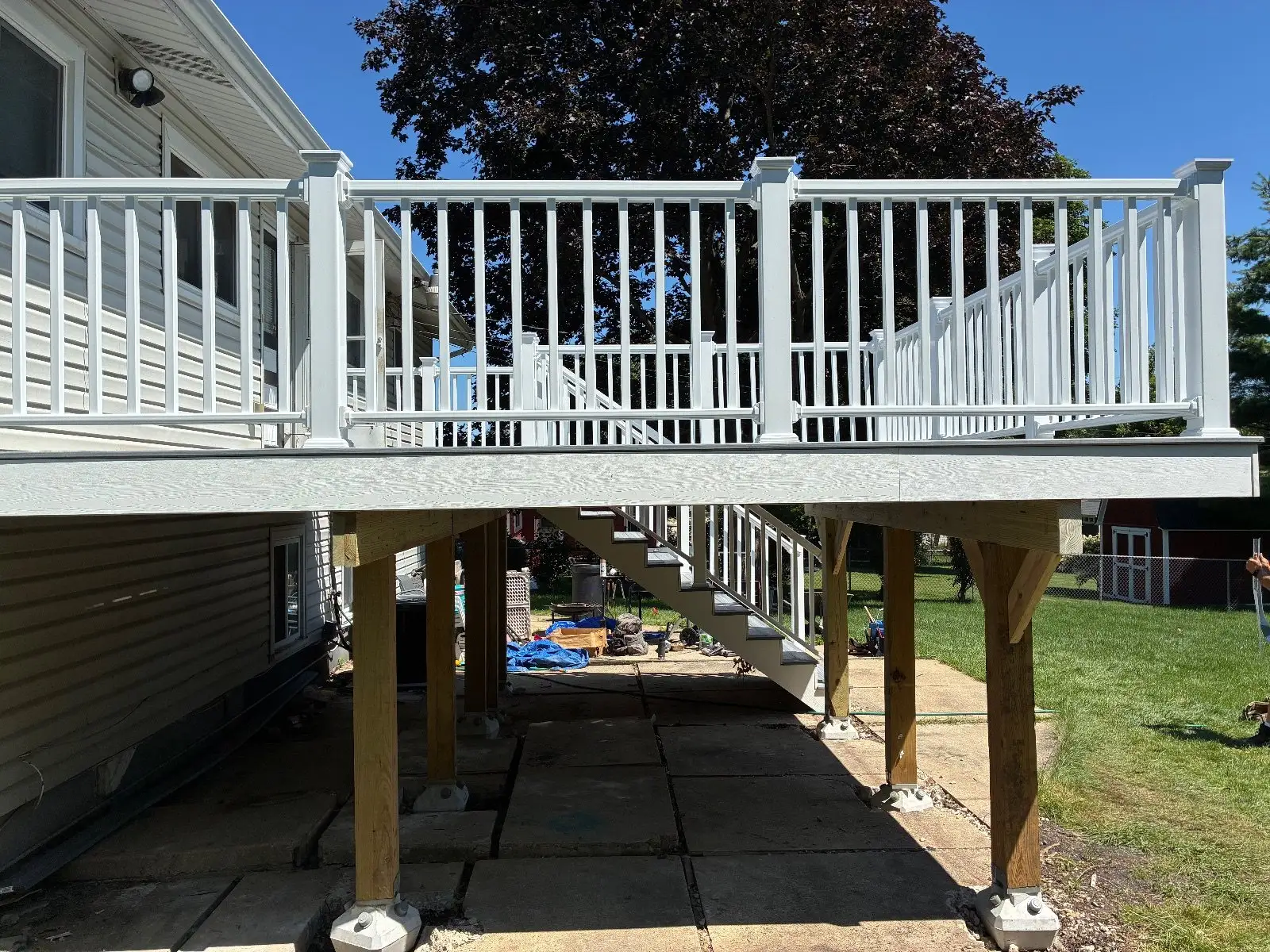
What a replacement costs
Typical installed ranges for DuPage County and the northwest suburbs in 2026, including tear-out, haul-away, new footings and frame, railings and the permit. Height, stairs and railing style move the number more than square footage does. These are budgeting bands, not a quote.
| Deck size | Pressure-treated | Capped composite |
|---|---|---|
| 12 by 16 (192 sq ft) | $5,800 to $8,600 | $10,600 to $17,300 |
| 16 by 20 (320 sq ft) | $9,600 to $14,400 | $17,600 to $28,800 |
| 20 by 24 (480 sq ft) | $14,400 to $21,600 | $26,400 to $43,200 |
Per square foot that is $30 to $45 for pressure-treated and $55 to $80 for capped composite. An elevated deck off a second-floor door, a long stair run or a multi-level layout can push any row up by several thousand dollars. The deck cost guide breaks every line down.
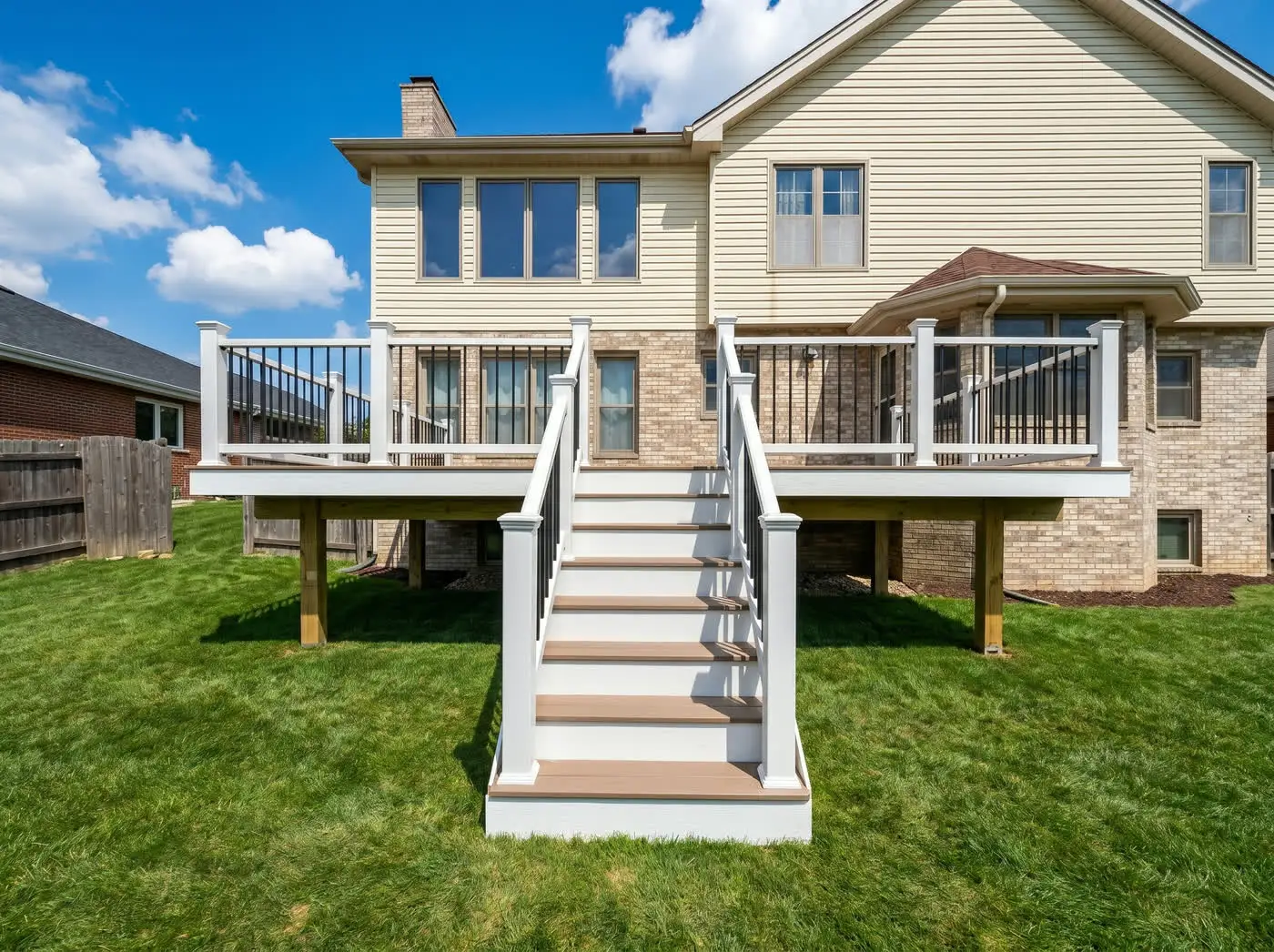
Same tear-out, better deck
Since we are starting from footings anyway, a replacement is the cheapest moment to change what you did not like about the old deck.
- Make it bigger, or reshape it around a door you actually use. The Hoffman Estates job below went from 12 by 20 to 16 by 20 in the same rebuild.
- Move from wood to composite and stop staining it
- Add a proper stair run, or upgrade to aluminum or cable railings
Changing the footprint costs far less now than it will as a second project later.
One teardown, start to finish
An aging wood deck in Naperville came out and a composite deck went back in its place, with black aluminum railings and a proper stair run down to the yard. Drone footage from the job.
That is the job most people call us for. If your posts are soft or the deck moves underfoot, this is what replacement looks like. If the frame is still sound, you likely want the cheaper re-deck instead, and we will tell you which one you need.
By town
Deck Replacement: jobs we have finished, named by town
Each one has its own page with the before, the framing, the board and the month.
-
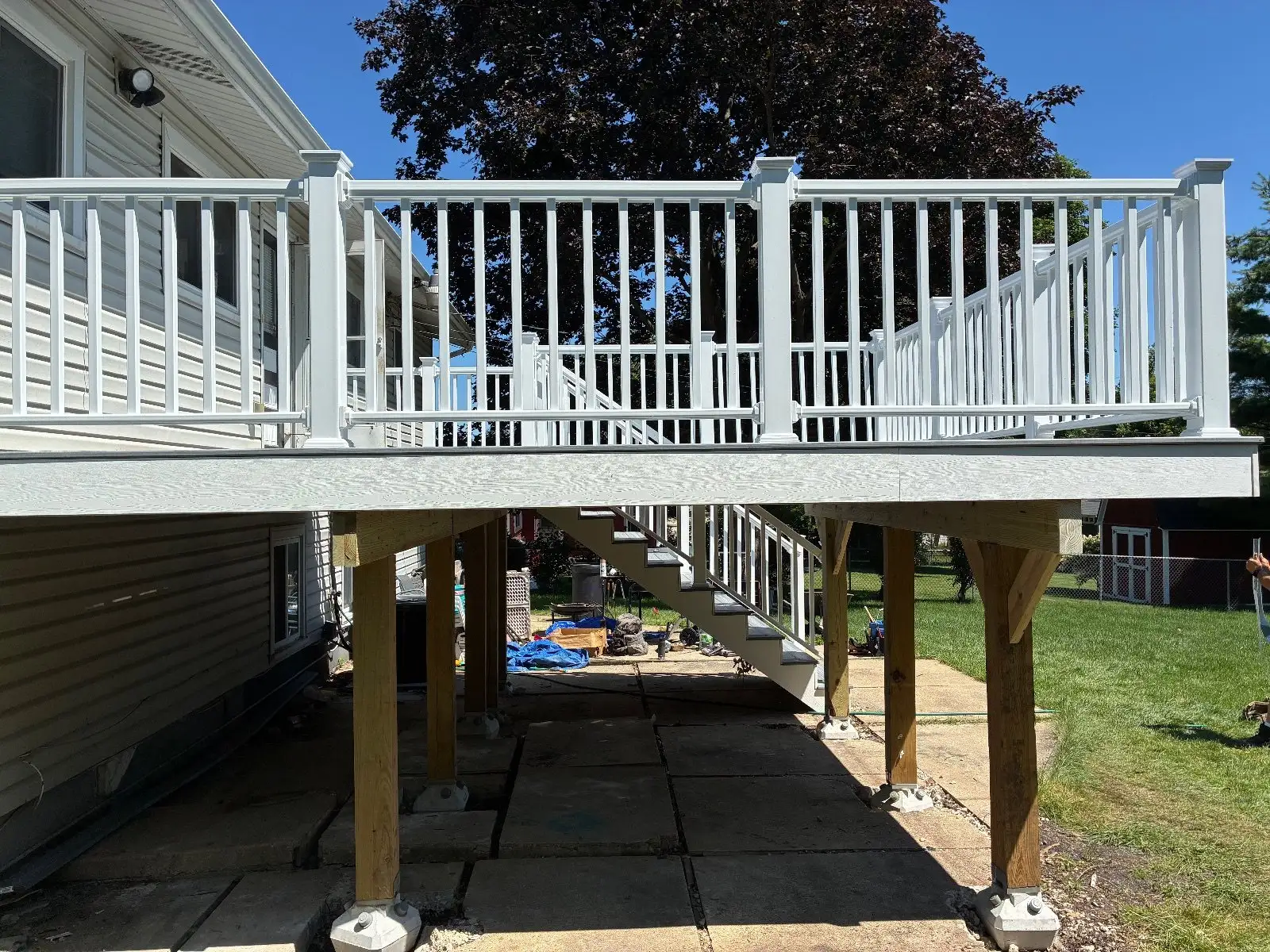
Hoffman Estates · July 2026
Trex Foggy Wharf capped composite, 16 by 20 feet
Trex Select railing, white
-
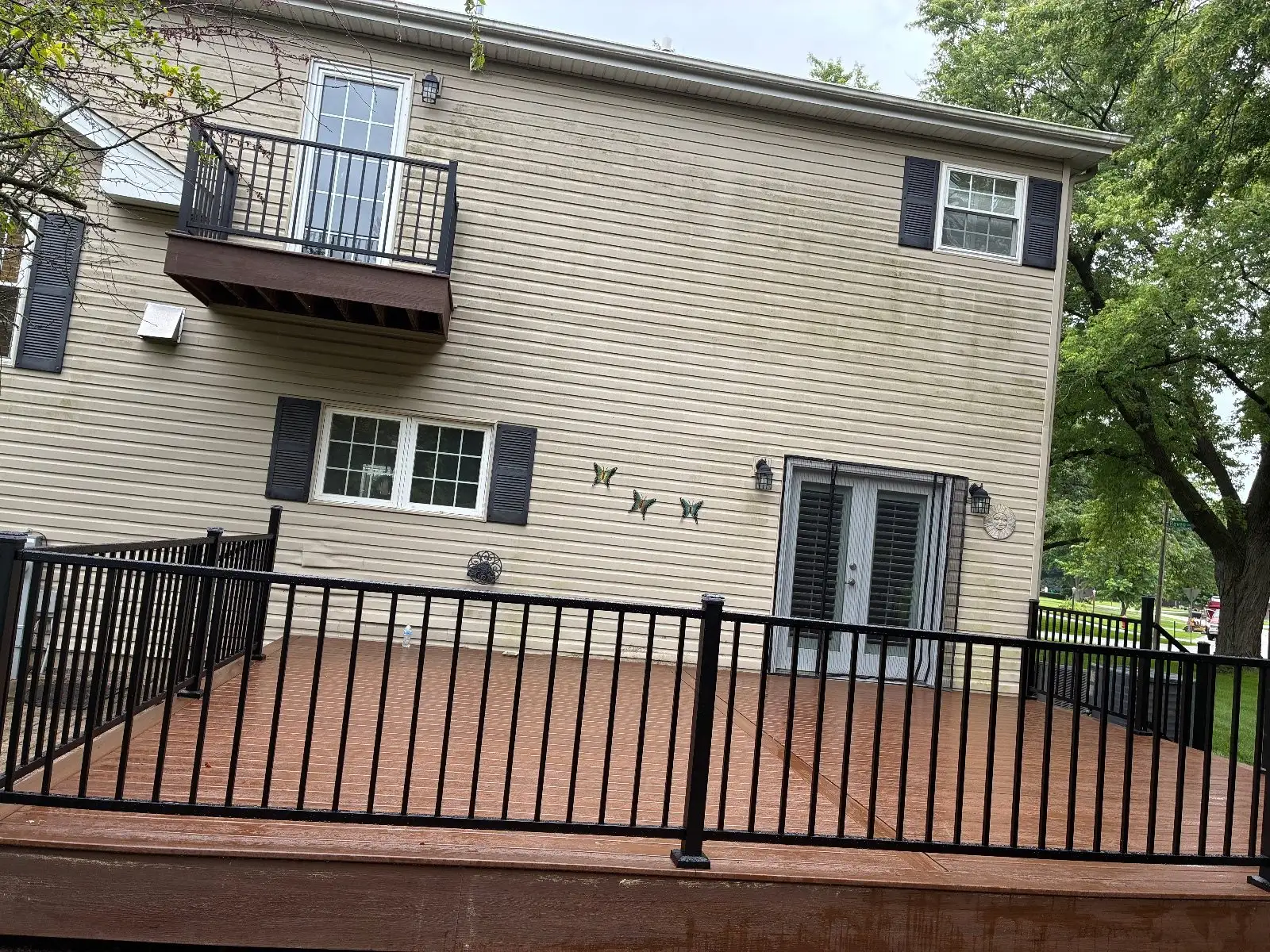
Bloomingdale · June 2026
Brown capped composite
Black aluminum railing
-
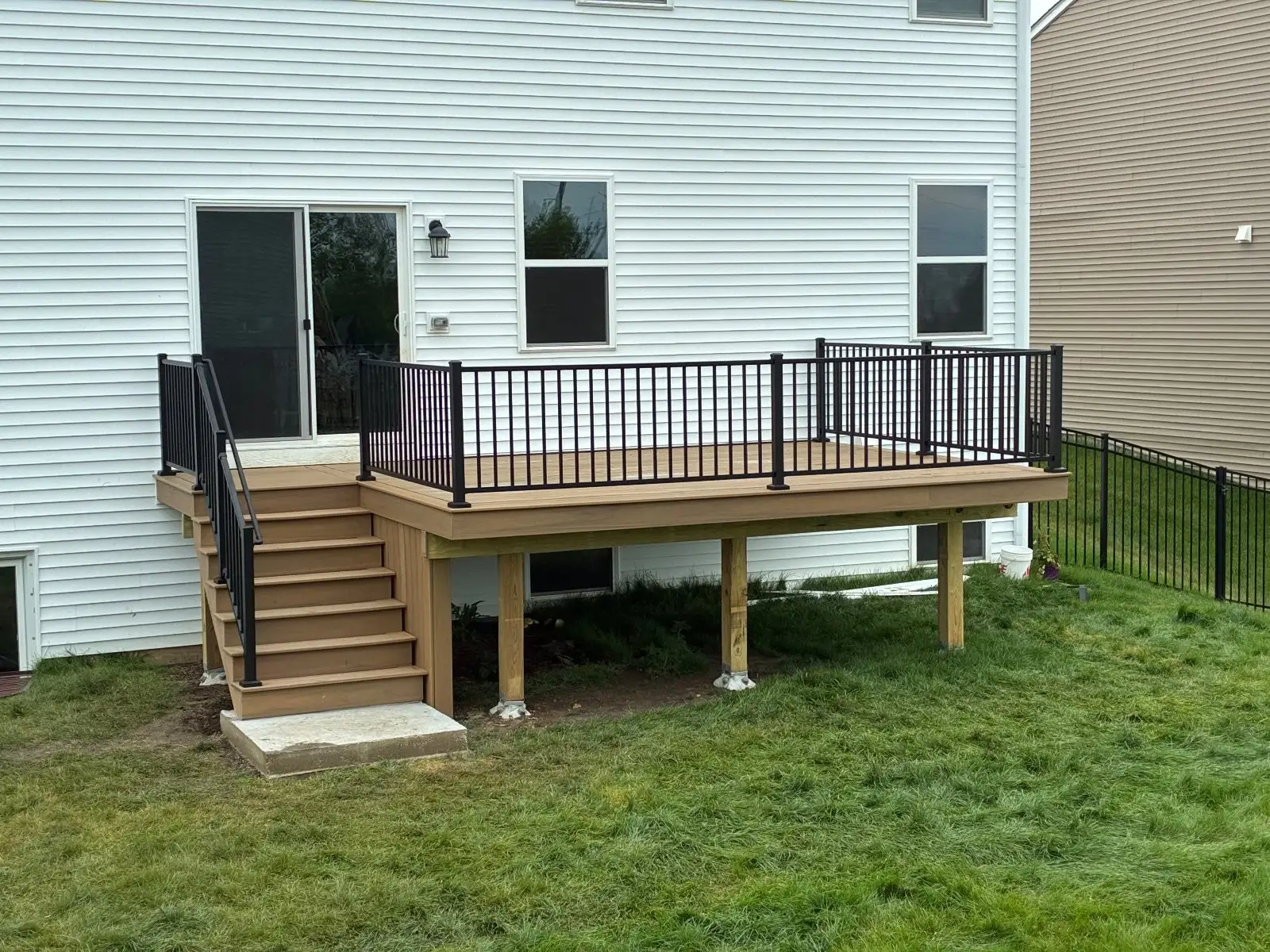
South Elgin · June 2026
TimberTech Coconut Husk capped composite, 14 by 20 feet
Trex Select railing, black
-
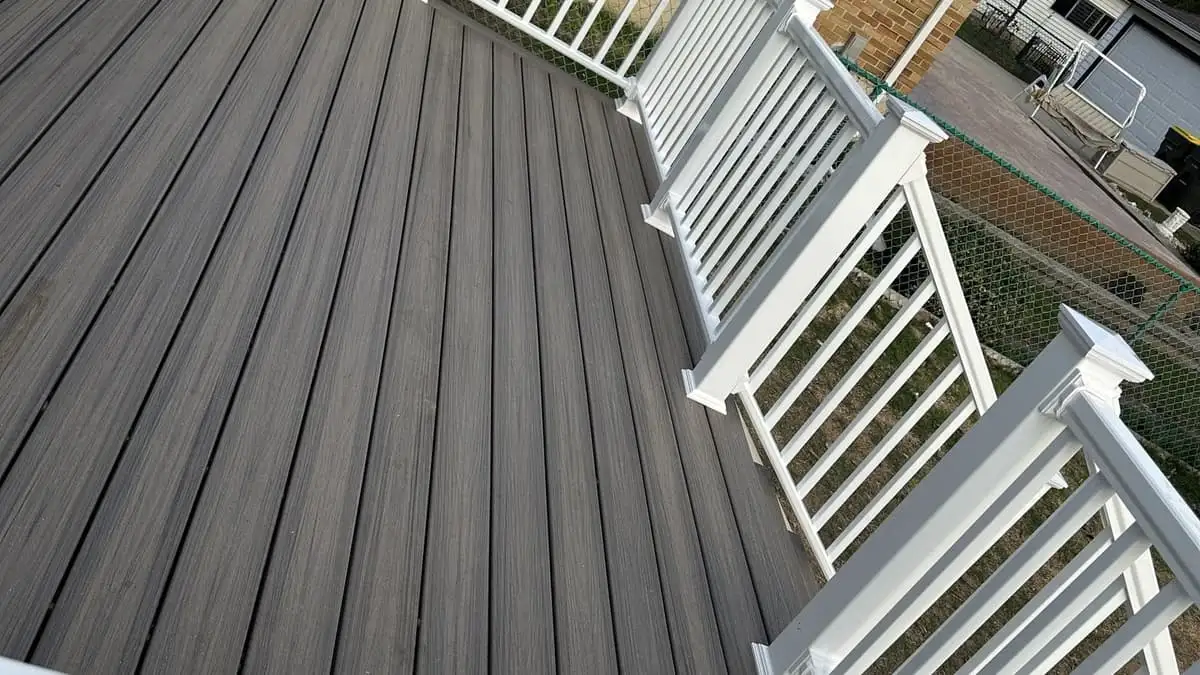
Roselle
Grey capped composite
White railing
-
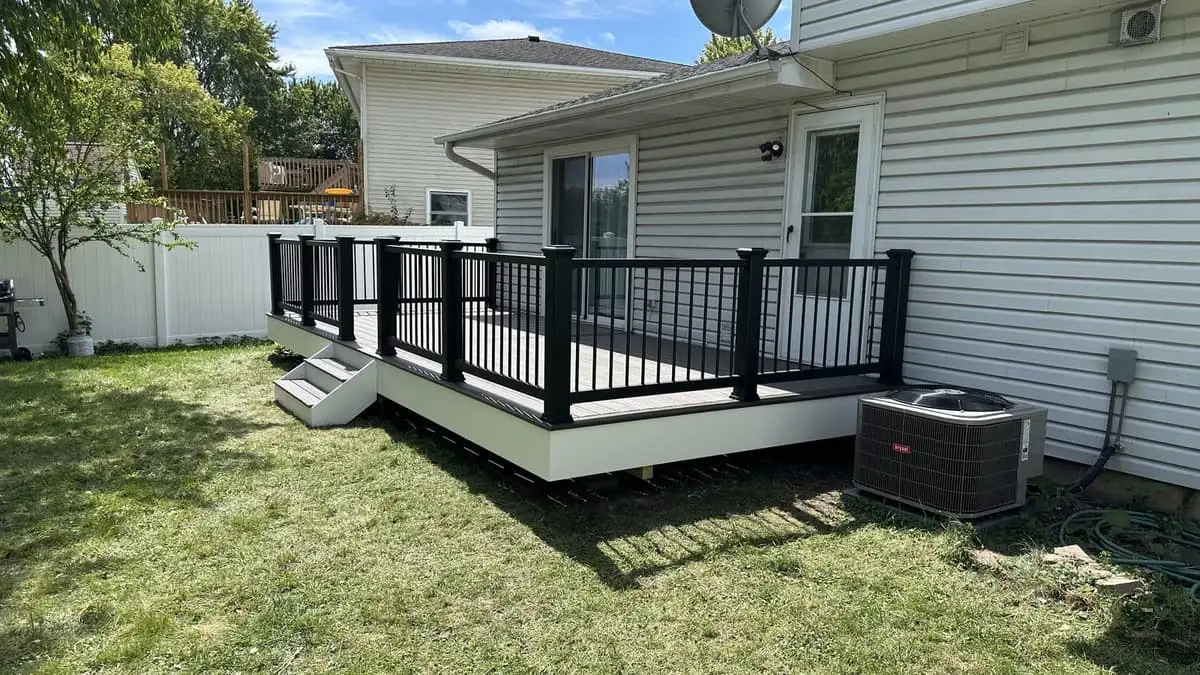
Streamwood
White capped composite
Black aluminum railing
-
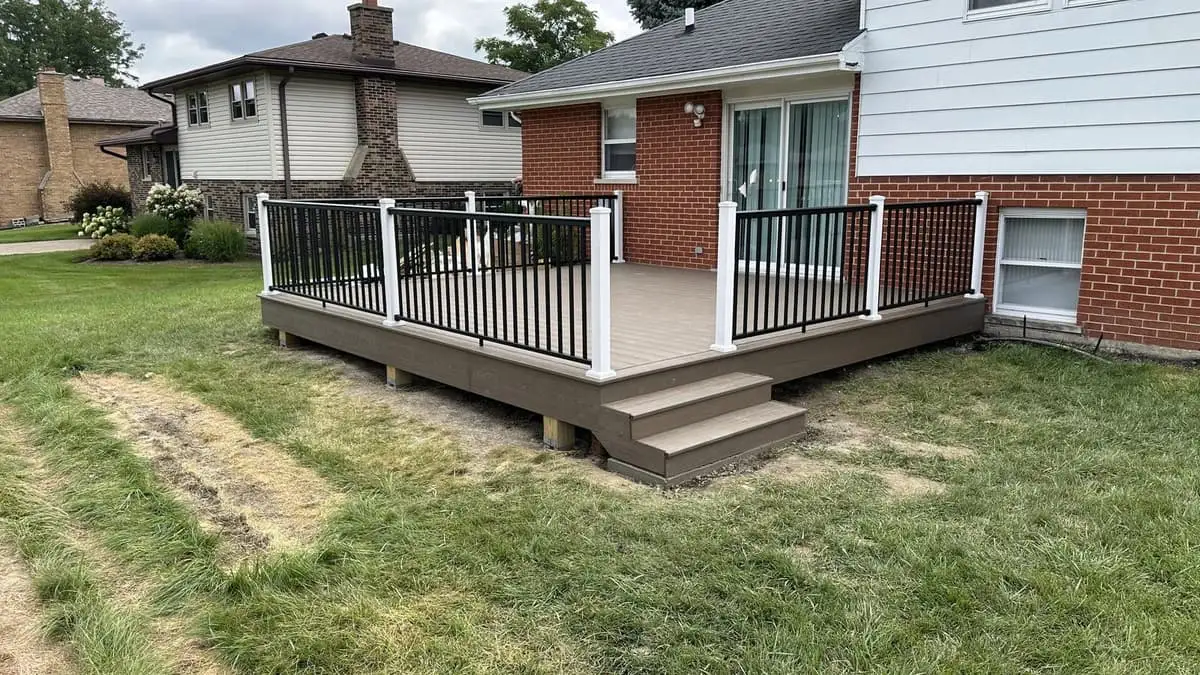
Hanover Park
Warm brown capped composite
White posts with black balusters
-
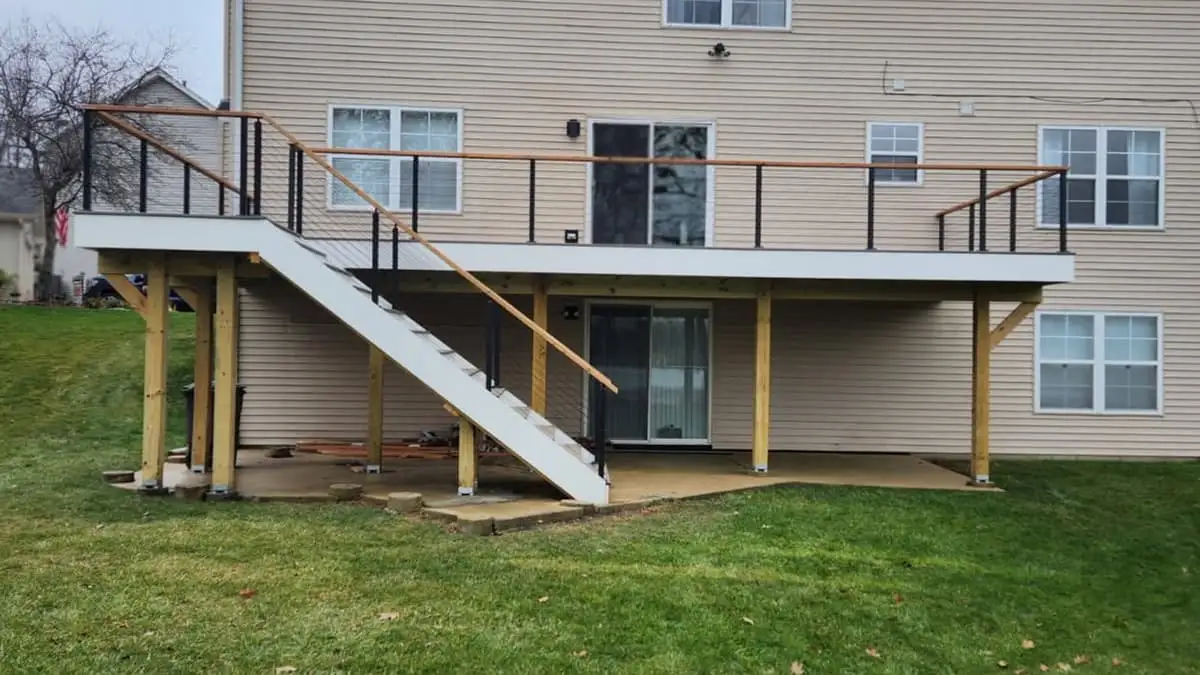
Hoffman Estates
Capped composite
Black aluminum railing
How a deck replacement runs
Free on-site inspection
We look under the deck, check the posts, ledger and joists, and tell you honestly whether you need a replacement or just a new surface.
Permit and plan
Most villages treat a full replacement as new construction, so it needs a permit. We file it and manage the inspections.
Tear-out and haul-away
The old deck comes out, the debris goes in our dumpster, and the site gets cleared. This is usually a one-day stage.
New footings, frame and surface
Code-depth footings, a new pressure-treated frame, then the surface and railings you picked. Then a full clean and a walkthrough with you.
Deck Replacement across DuPage County and the northwest suburbs
We're based in Roselle and build in these towns every week.
Related deck services
Re-Decking & Resurfacing
If the frame checks out, this is the cheaper fix. Same new look, less money.
Learn moreNew Deck Construction
Starting from bare grass instead? Here is how a ground-up build runs.
Learn moreComposite & Trex Decks
Most replacements go composite. No staining, and a 25 to 50 year warranty.
Learn moreDecks we have rebuilt
Drag the handle to see what these looked like before we started. Same crew, same standard, whichever service you need.
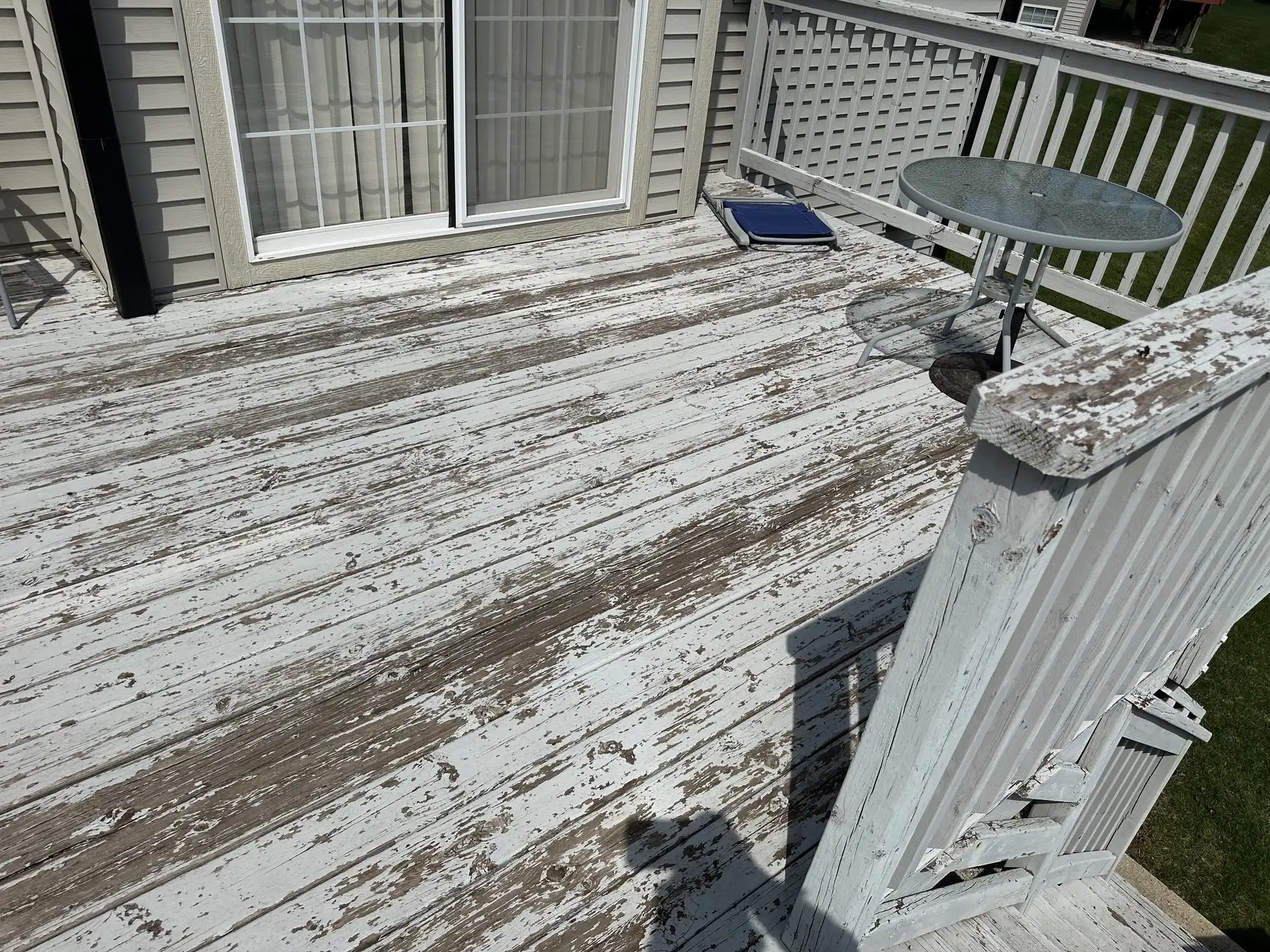
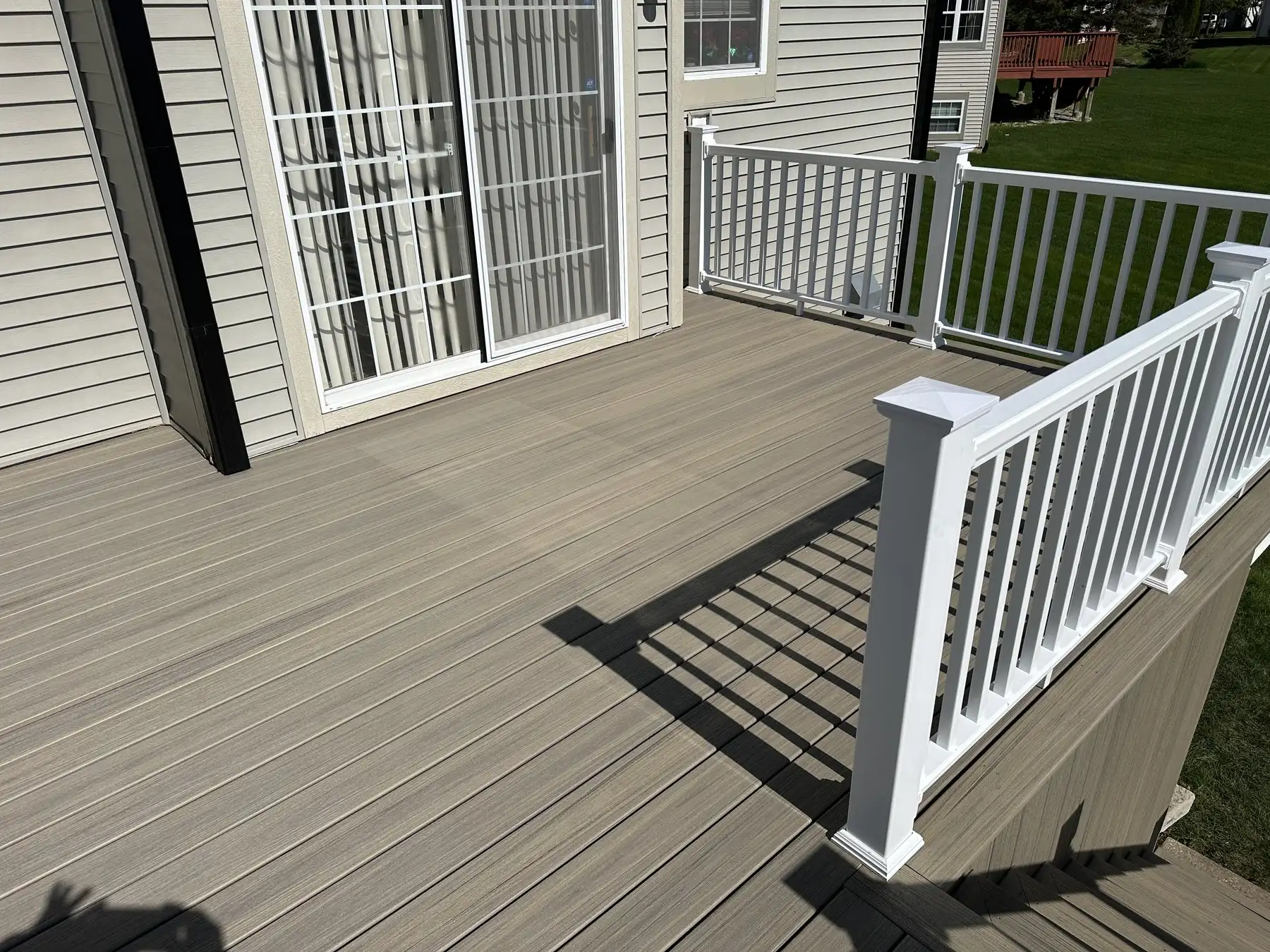
White paint flaking off the boards and a sagging rail, replaced with warm greige composite and white railings.
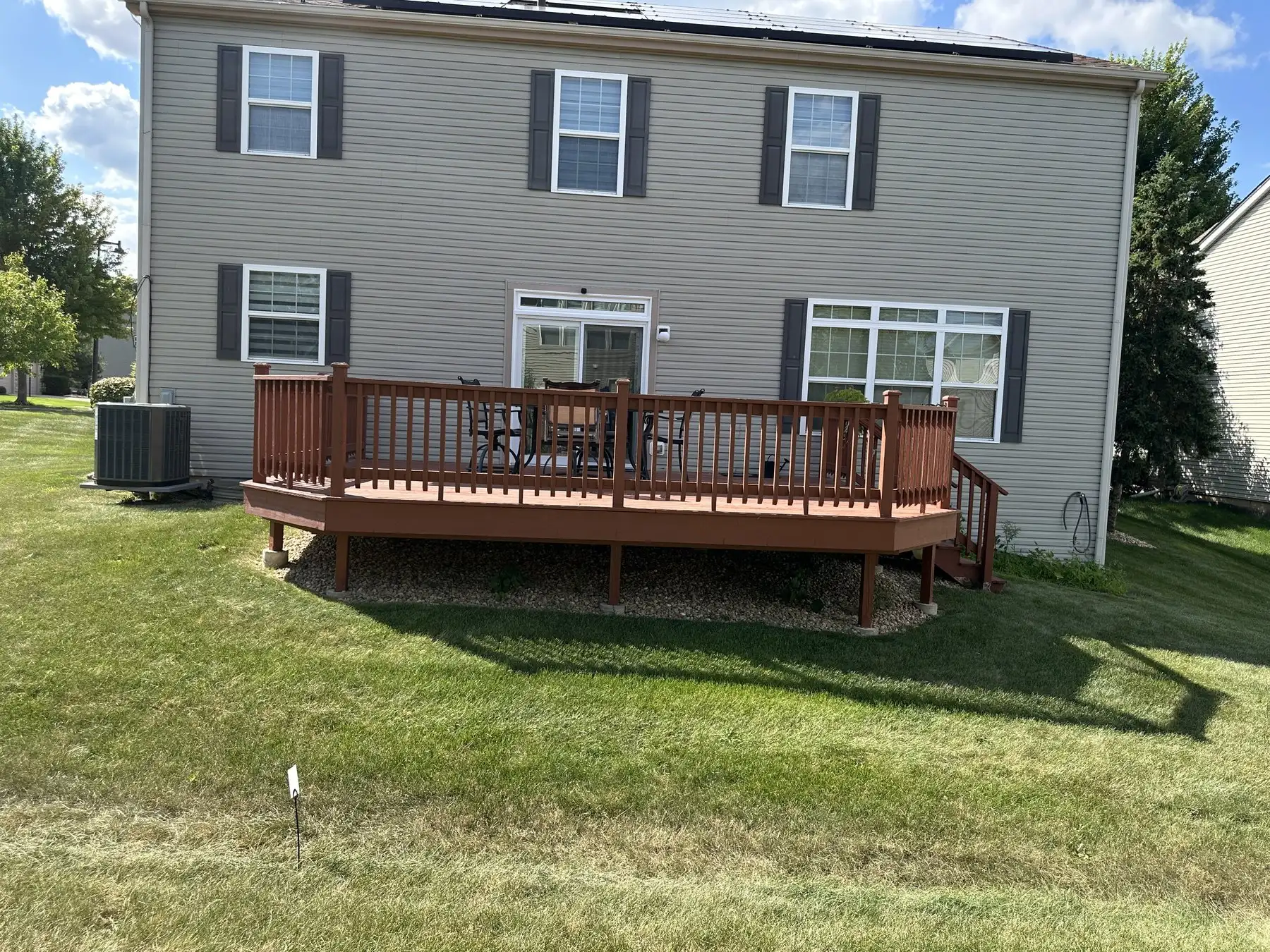
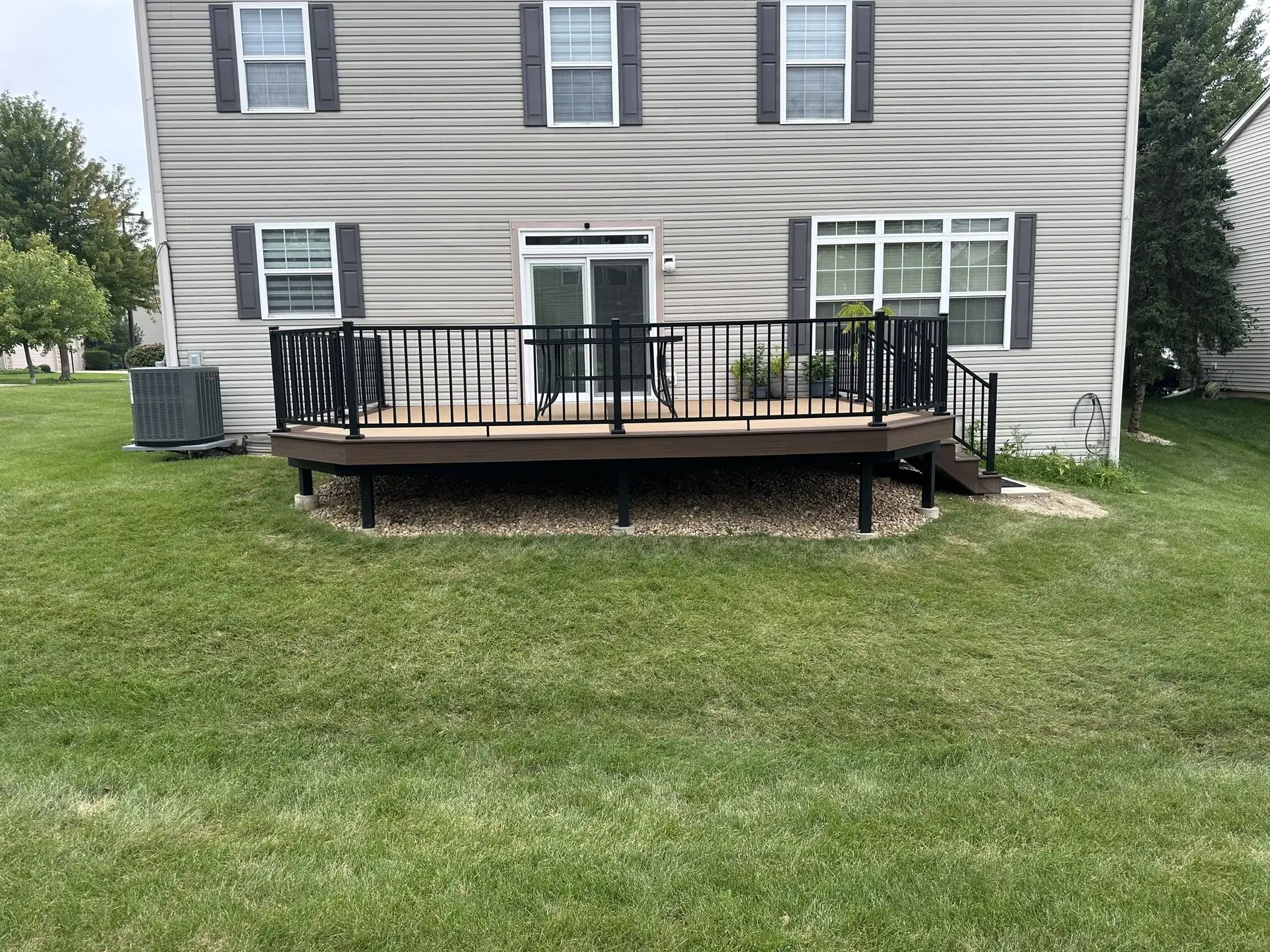
A tired stained-wood deck torn out and rebuilt in warm composite with black aluminum railings and angled corners.
Deck replacement questions
How do I know if my deck needs replacing?
Check the posts at ground level and the board where the deck meets the house. If a post is soft enough to push a screwdriver into, or the deck moves when you walk on it, the structure is finished. Surface splits and grey boards alone are usually just a re-decking job.
How much does it cost to replace a deck?
In our market a replacement runs $30 to $45 per square foot in pressure-treated and $55 to $80 in capped composite, installed, with tear-out and the permit included. A 16 by 20 replacement lands around $9,600 to $14,400 in wood or $17,600 to $28,800 in composite. Height and stairs push it up from there. We give you a written price after one visit.
Is it cheaper to re-deck or replace?
Re-decking is cheaper right up until the frame is the problem. New boards on a failing structure means paying twice within a few years. We inspect underneath first and give you the honest answer, including when that answer is the smaller job.
Do you haul away the old deck?
Yes. Demolition, the dumpster and disposal are included in the replacement price. You will not find a pile of old lumber left in the driveway or a separate disposal charge on the invoice.
Do I need a permit to replace a deck?
Almost always, yes. Most villages in DuPage County and northwest Cook treat a full replacement as new construction. We pull the permit and handle inspections. Our permit guide covers how each town handles it.
How long does a deck replacement take?
Tear-out is usually one day. The rebuild runs two to four weeks depending on size, height and material, once the permit is issued. We give you a real window at the estimate.
Can I make the new deck bigger than the old one?
Yes, and a replacement is the cheapest time to do it. Since we are digging new footings anyway, changing the footprint costs far less now than as a separate project later. It may change the permit scope, which we handle.
Not sure if yours needs replacing?
We will come out, look underneath, and tell you straight. If a new surface will do, that is what we will quote. Free and no pressure.