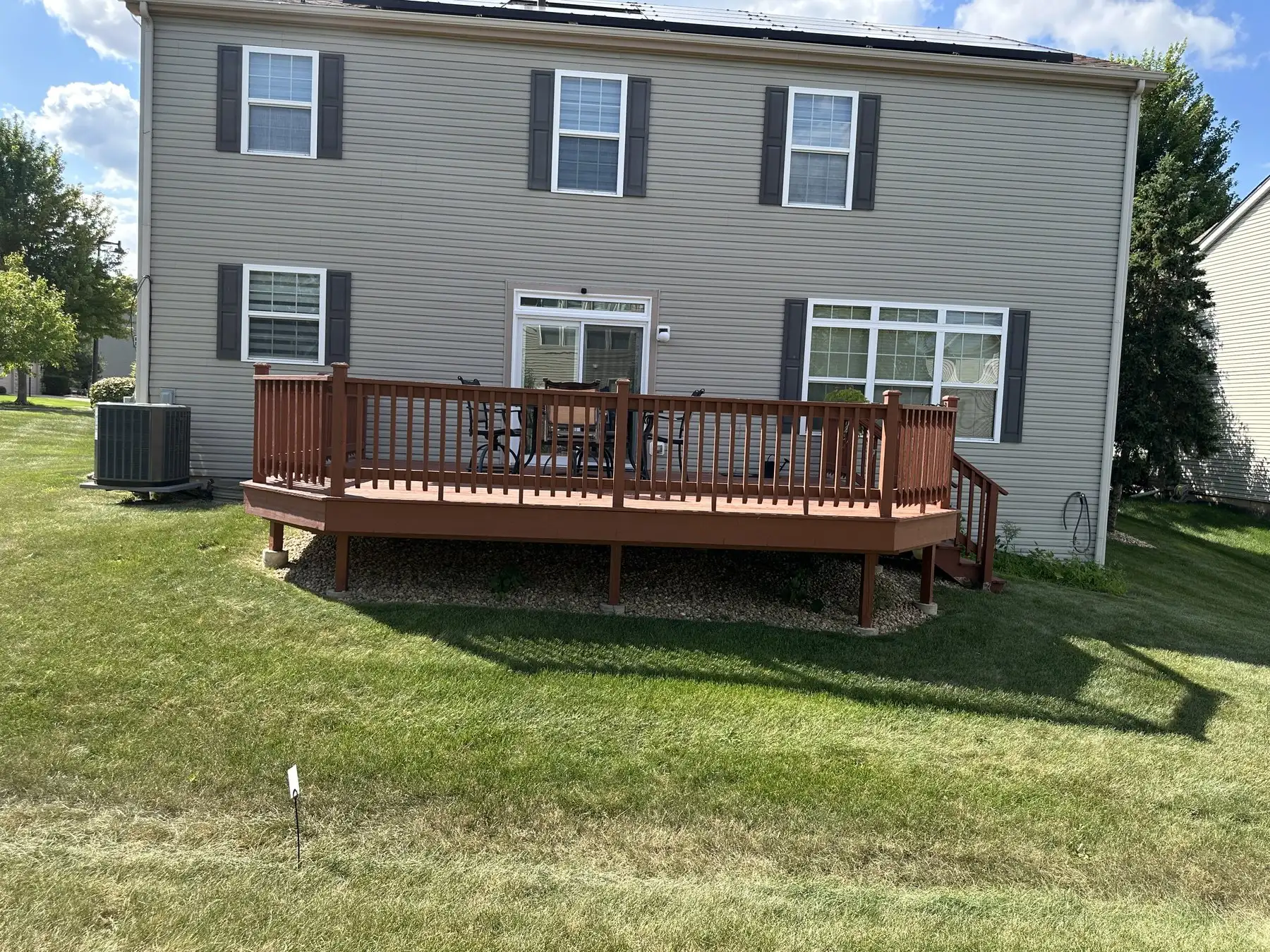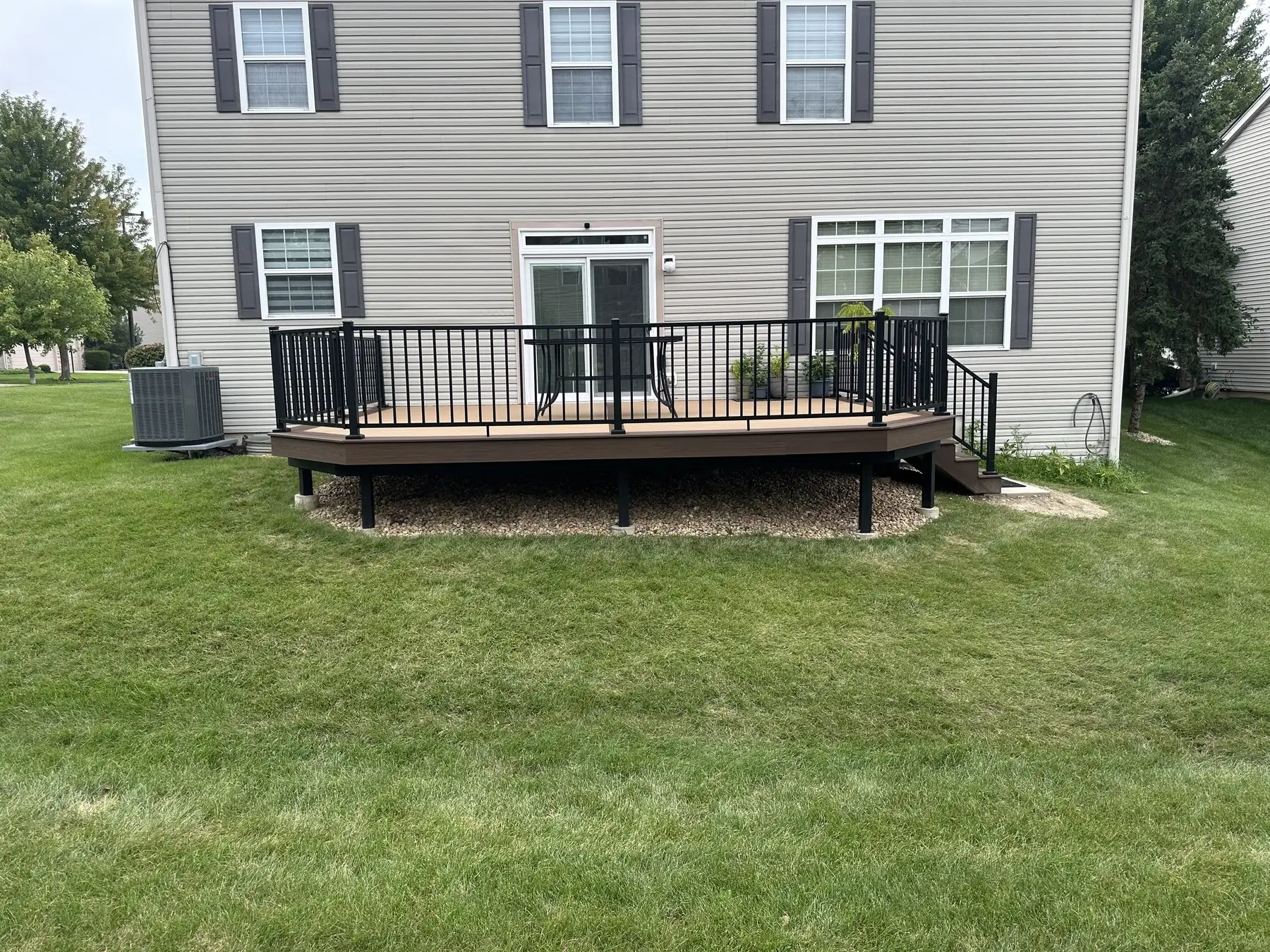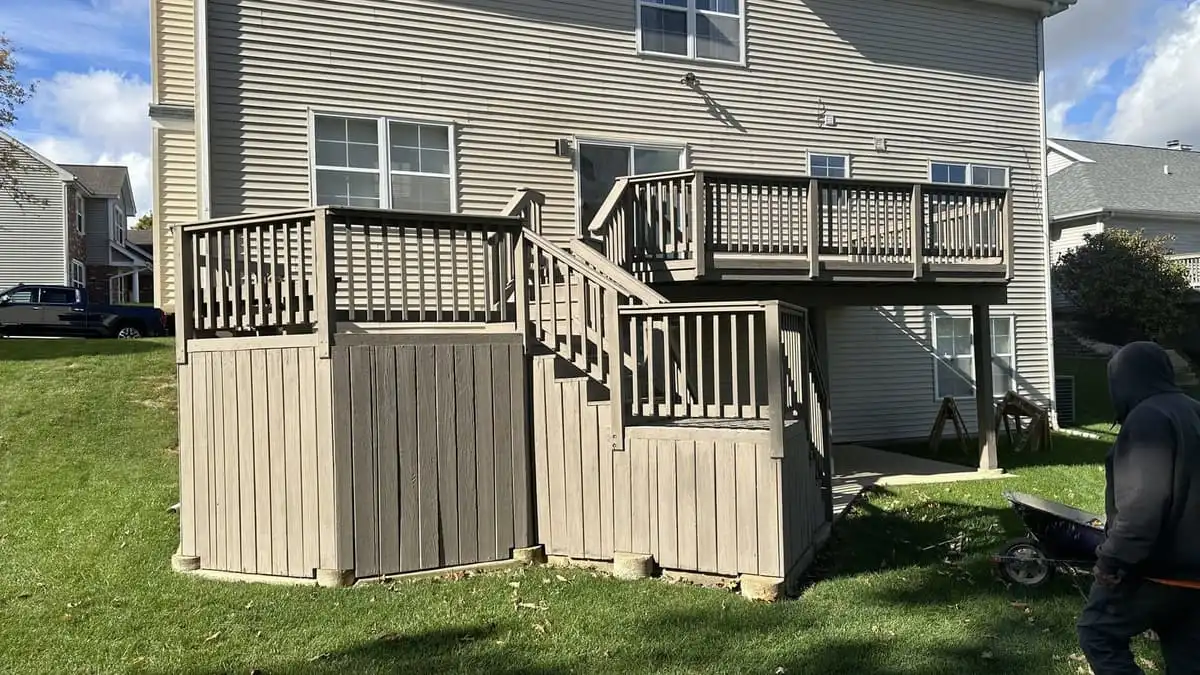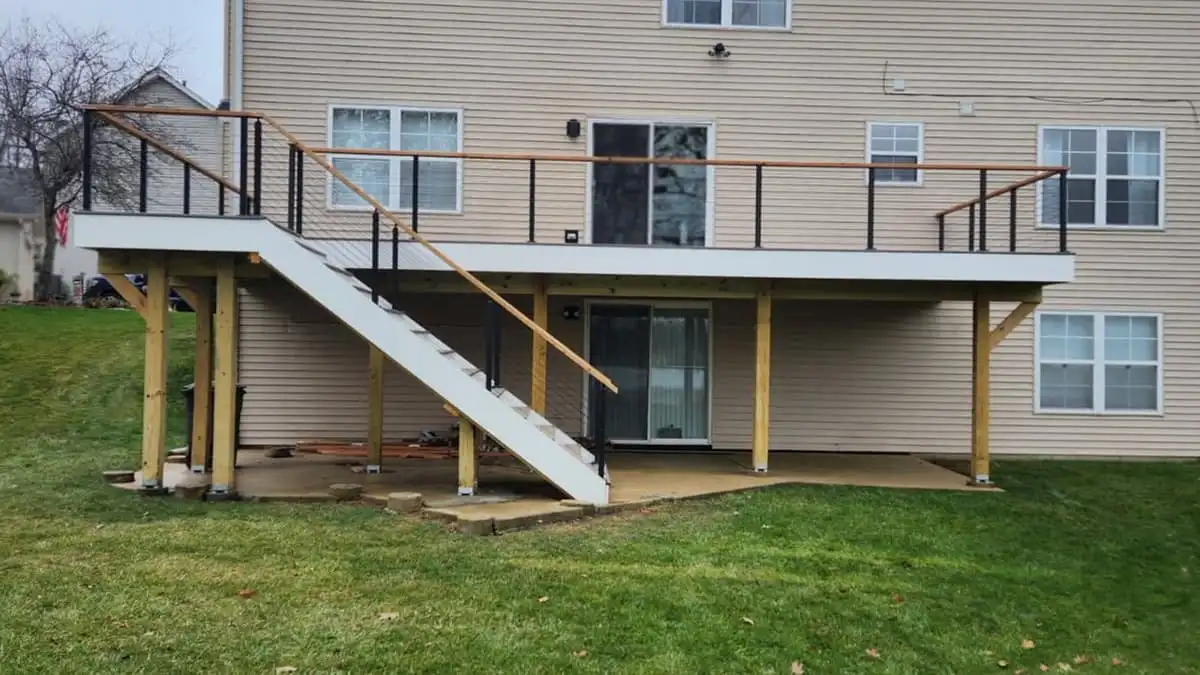
Why this matters more than people think
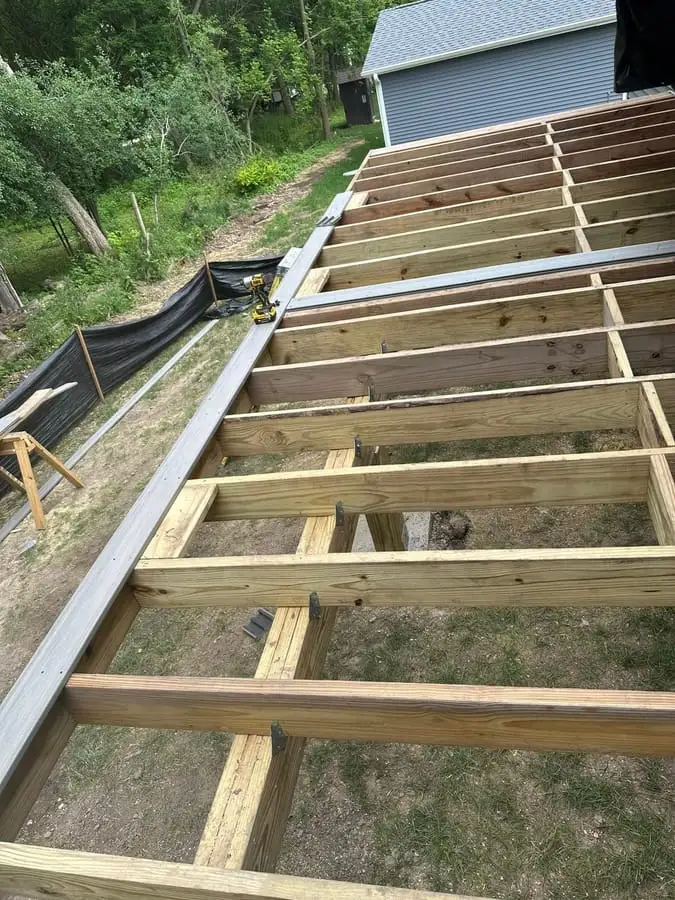
A permit is not paperwork for its own sake. The footing inspection is the one moment somebody independent checks the part of your deck you will never see again. Once the decking goes down, nobody knows how deep those posts went except the crew that dug them.
It also follows the house. An unpermitted deck routinely surfaces during a sale, and a buyer can demand it be inspected, corrected or removed. That is a bad conversation to have at closing.
How the process actually runs
- Plans. A drawing showing size, height, framing, footing depth, railing detail and where the deck sits relative to your property lines.
- Submittal. Filed with your village's building or community development department. Many now take it through an online portal. Schaumburg, for example, uses an OpenGov portal.
- Review. Staff check the structure against code and the location against your zoning setbacks.
- Footing inspection. Holes are dug and inspected before concrete or posts go in. This is the gate that matters.
- Framing inspection. Some villages add one once the frame is up and before decking covers it.
- Final inspection. After railings and stairs are complete.
The four things villages care about
Footing depth
Below the frost line, at the depth your village sets. Schaumburg requires 42 inches. Others in the area are in similar territory but you should never assume, because it is set locally. This is the specification that decides whether your deck is still level in ten years.
Setbacks
How close the deck can sit to your side and rear property lines, which is zoning rather than building code and varies by district within the same town. Corner lots and easements complicate it further. This is the most common reason a deck design has to change.
Railing height and spacing
Residential deck guards are generally required at 36 inches minimum, with baluster gaps small enough that a 4 inch sphere cannot pass. Stair railings carry their own rules. Decks built twenty years ago routinely miss current requirements, which is why a replacement often includes a railing upgrade whether you wanted one or not.
The ledger connection
How the deck attaches to your house. It should be bolted with structural fasteners and properly flashed. Older decks were often nailed and poorly flashed, which lets water sit against the rim joist and rot the house rather than the deck. Inspectors look closely here.
Who issues the permit in your town
Inside village limits you deal with the municipality, not DuPage County. The department name differs town to town, which is the main thing that confuses people searching for it.
| Town | Handled by |
|---|---|
| Schaumburg | Community Development Department, online portal |
| Wheaton | Building Department |
| Bloomingdale | Building Department |
| Bartlett | Building Division, within Planning and Development Services |
| Elk Grove Village | Community Development Department |
| Glendale Heights | Community Development Department |
| Hanover Park | Inspectional Services Division |
| Itasca | Community Development Department |
We build in all of these and more. Pick your town for local detail: Roselle , Bloomingdale , Carol Stream , Bartlett , Schaumburg , Itasca , Elk Grove Village , Hoffman Estates , Addison , Wheaton , Streamwood , Hanover Park , Naperville , Glen Ellyn , South Elgin , South Barrington , Wayne , Medinah , Pingree Grove .
Contractor registration
Illinois does not issue a state-level license specifically for deck builders, which surprises people. What villages do require is that the contractor is registered with them and carries current insurance. That is the check that actually protects you.
So when a contractor tells you they are "licensed," ask what that means concretely. We are licensed, bonded and fully insured, and we register where the village requires it.
What this means for your schedule
Permit time is the longest single wait on most deck projects, and it peaks in spring when every contractor in the area files at once. Two to four weeks of build time is typical once the permit is issued, but getting the permit can take longer than the build.
The practical takeaway: if you want a deck for summer, start the conversation in winter. January and February are the quiet months and the easiest time to get on a calendar.
Ready to start? See the 2026 deck cost guide to set a budget, or just get a free on-site estimate and we will take the paperwork from there.