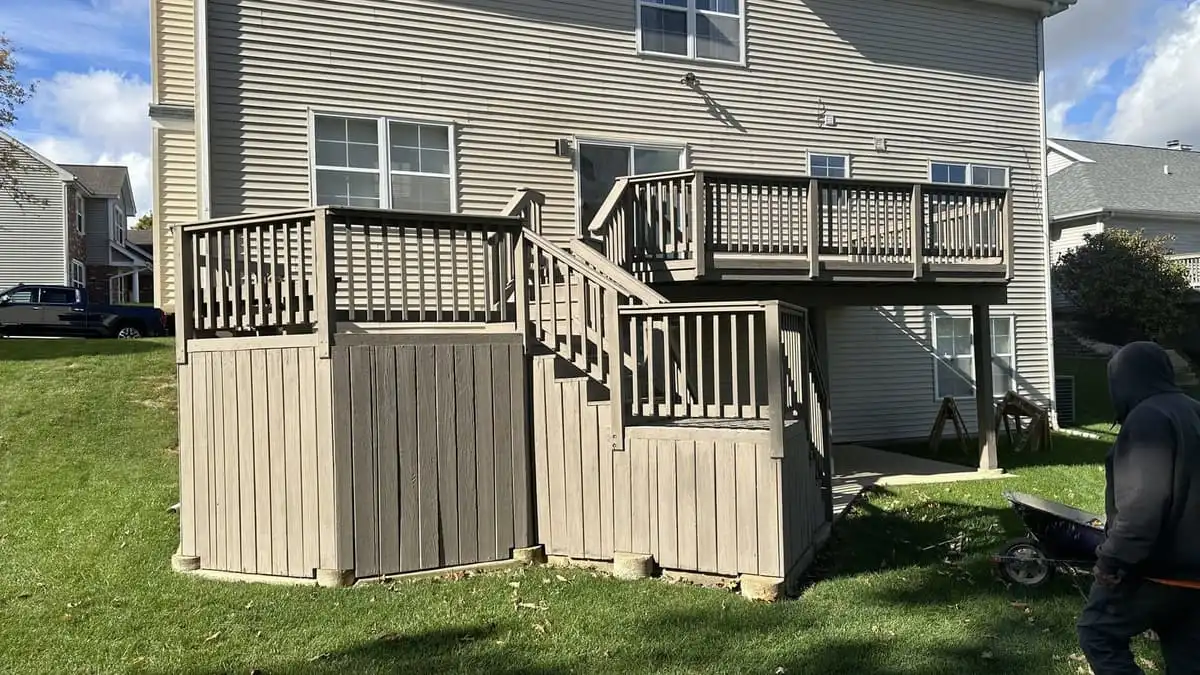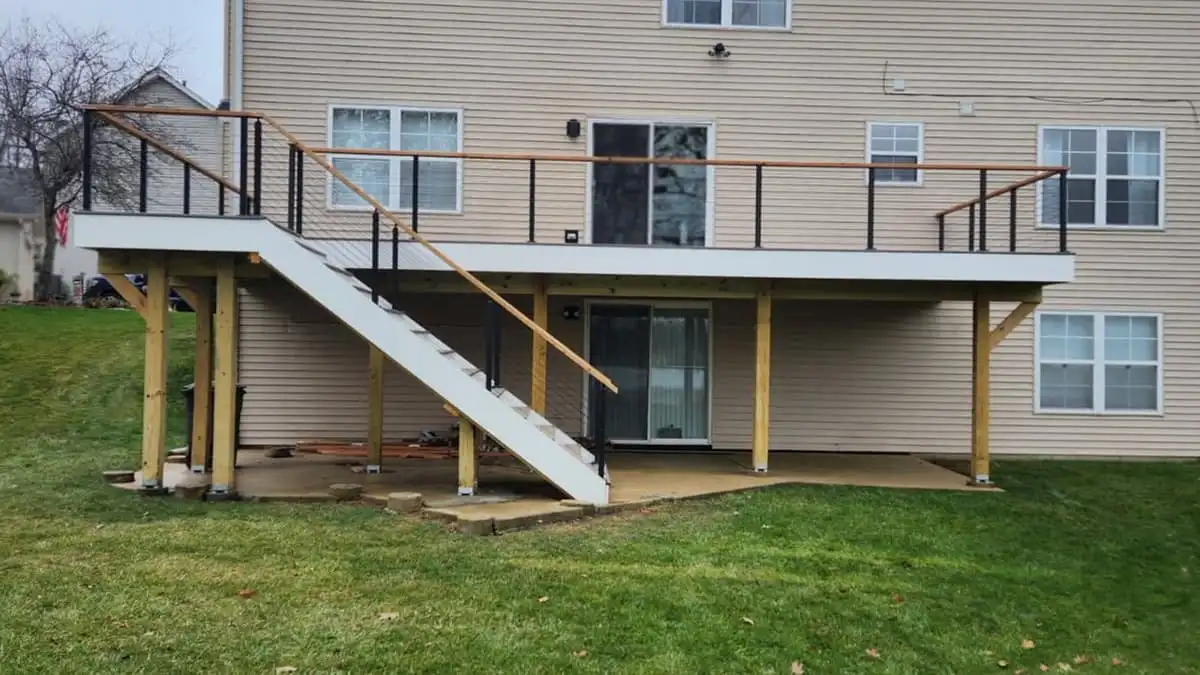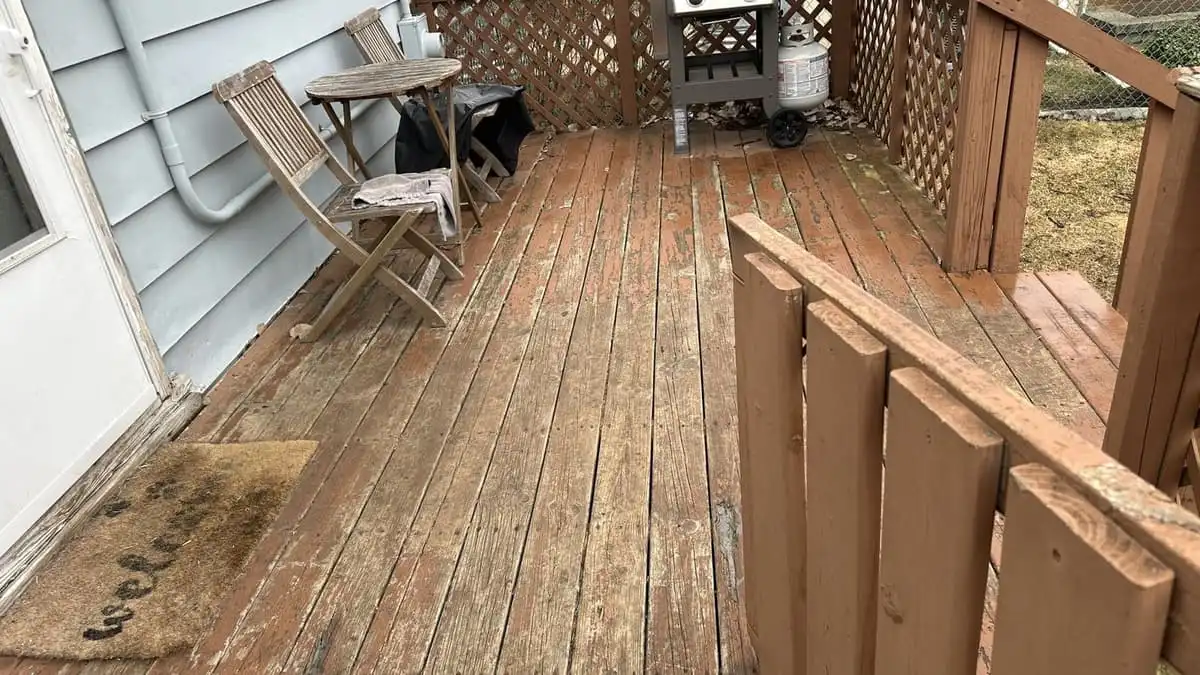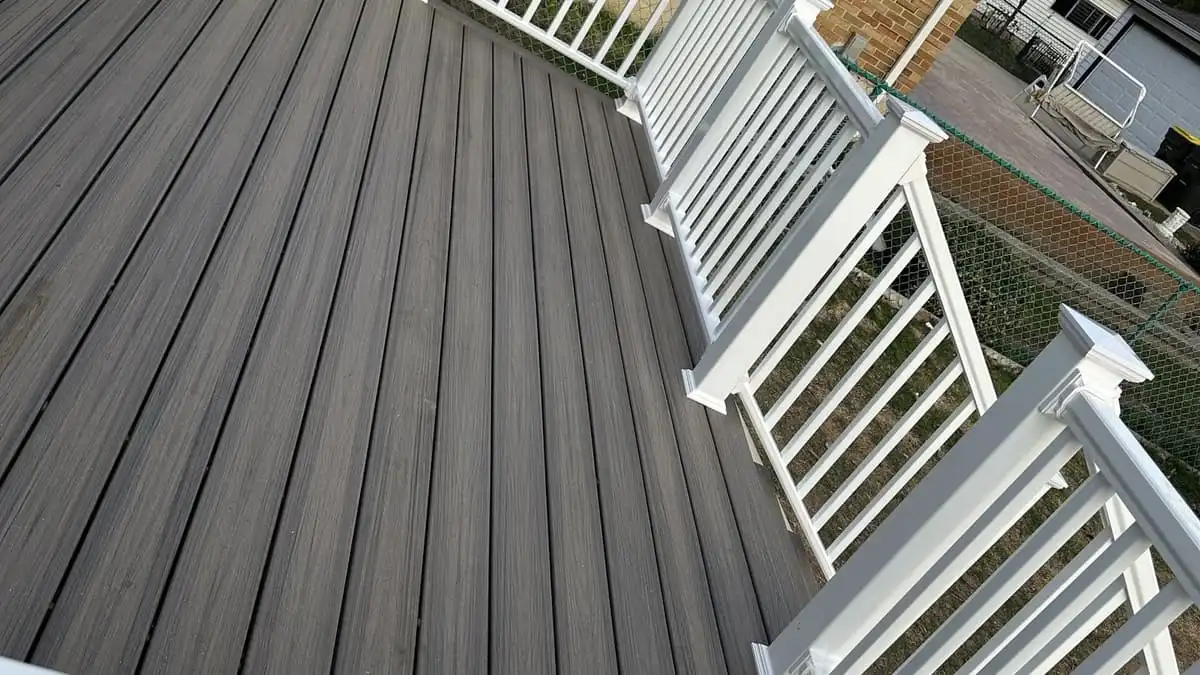
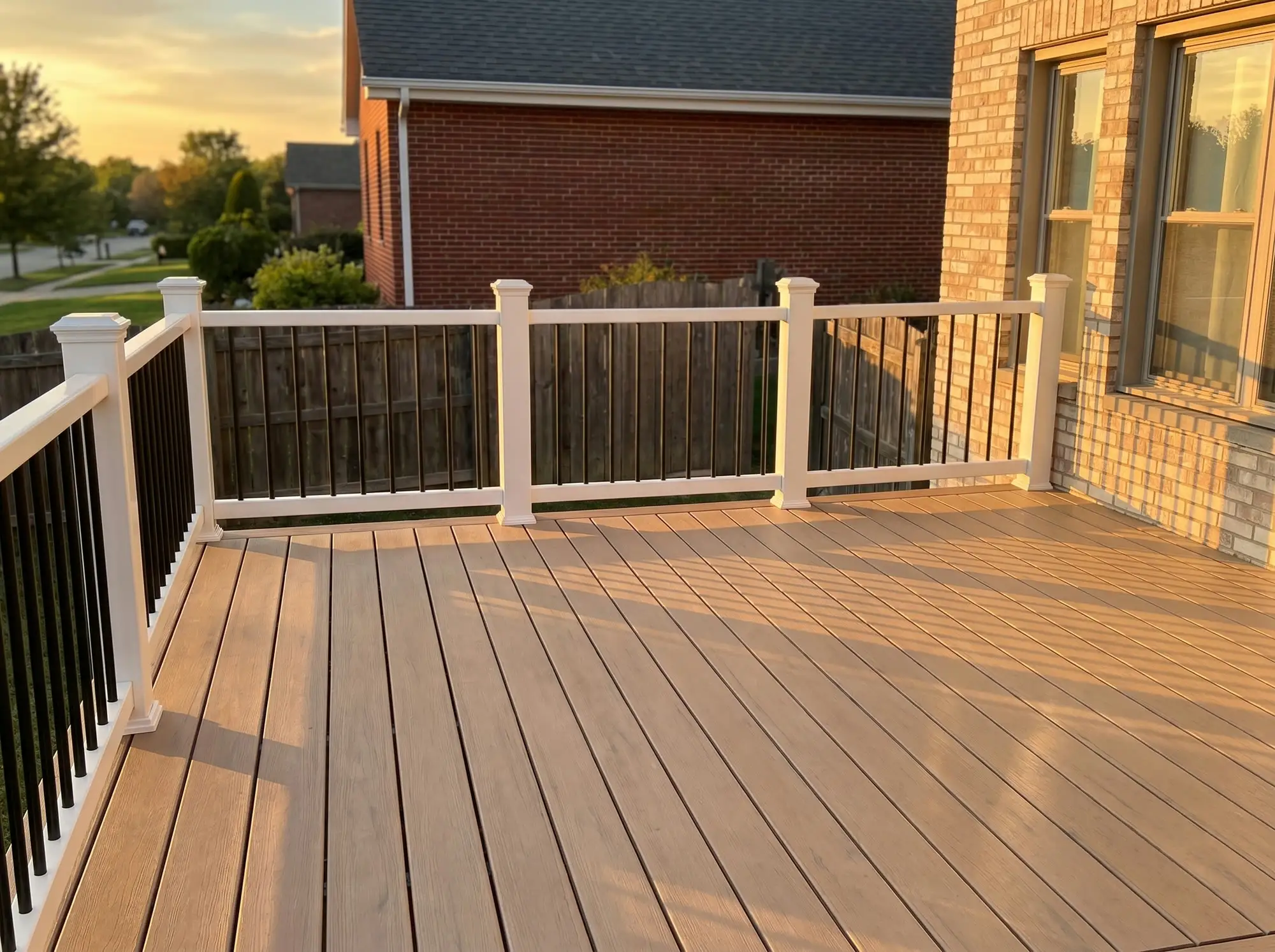
Side by side
| Pressure-treated | Cedar | Capped composite | |
|---|---|---|---|
| Installed per sq ft | $30 to $45 | $40 to $60 | $55 to $90 |
| Maintenance | Re-coat every 2 to 4 yrs | Re-coat every 2 to 4 yrs | Wash only |
| Upkeep cost per decade | $1,500 to $3,000 | $1,500 to $3,000 | Near zero |
| Typical life | 15 to 20 yrs | 15 to 20 yrs | 25 to 50 yr warranty |
| Splinters | Yes, with age | Yes, with age | No |
| Heat in full sun | Cooler | Cooler | Warmer, especially dark colors |
| Repairs | Cheap, board by board | Cheap, board by board | Board swap, color match can vary |
| Looks like wood | It is wood | It is wood | Close, not identical up close |
The real question is how long you are staying
Run it over ten years on a 320 square foot deck. Composite might cost $6,000 more to build. Wood will ask for roughly $1,500 to $3,000 in stain, cleaner and weekends over the same period, plus the time.
So at ten years composite is still slightly ahead on cash but roughly even once you value your weekends. At twenty years composite is clearly cheaper. At five years, wood wins outright.
Where wood still wins
- Up-front cost. The same budget buys a noticeably bigger deck.
- The look and feel. Composite has improved a lot. Cedar grain up close is still cedar grain.
- Heat. Wood runs cooler underfoot in direct summer sun than dark composite.
- Repairs. A damaged board is a cheap, fast swap you could do yourself.
- Large decks. Above about 500 square feet the material premium on composite gets hard to justify unless upkeep is the deciding factor.
A lot of builders in this area stopped offering wood because composite is the bigger ticket. We still build cedar and pressure-treated decks, because for plenty of yards it is the right answer.
Where composite wins
- You never stain it. That is what people are actually buying.
- No splinters. A real consideration with young kids and bare feet.
- Warranty. 25 to 50 years against fading, staining and structural failure.
- Consistency. No warping, cupping or checking after a freeze and thaw cycle.
- It looks the same in year ten. Wood does not, unless you keep after it.
We install Trex, TimberTech, Azek, Fiberon and Deckorators. If you have narrowed it to composite, our Trex vs TimberTech comparison covers the brand differences.
The part both options share
The frame. Almost every composite deck sits on pressure-treated framing, and that structure is what decides how long the deck lasts. Composite also needs tighter joist spacing than wood does, and a 50 year board on a badly built frame is still a ten year deck.
That is why we frame both the same way, to code depth footings and manufacturer-specified spacing. The surface is where your budget goes. The frame is not negotiable.
What we would tell you at the estimate
Choose wood if the budget is the constraint, if the deck is large, or if you genuinely like the look of real timber and do not mind a weekend every few years.
Choose composite if you are staying, if you have kids on the deck barefoot, or if the honest answer is that you will never get around to re-staining it. That last one is the most common reason people switch, and it is a perfectly good reason.
Either way, get the frame right. See what a build actually involves in new deck construction, or price your options with the 2026 deck cost guide.