Deck Railing Ideas, From Decks We Built This Year

By Ryan Miser, RR Affordable Deck Builders · Published October 21, 2026 · Updated October 21, 2026

5.0 from 64 Google reviews Licensed, bonded & insured Our own crew, never subcontracted
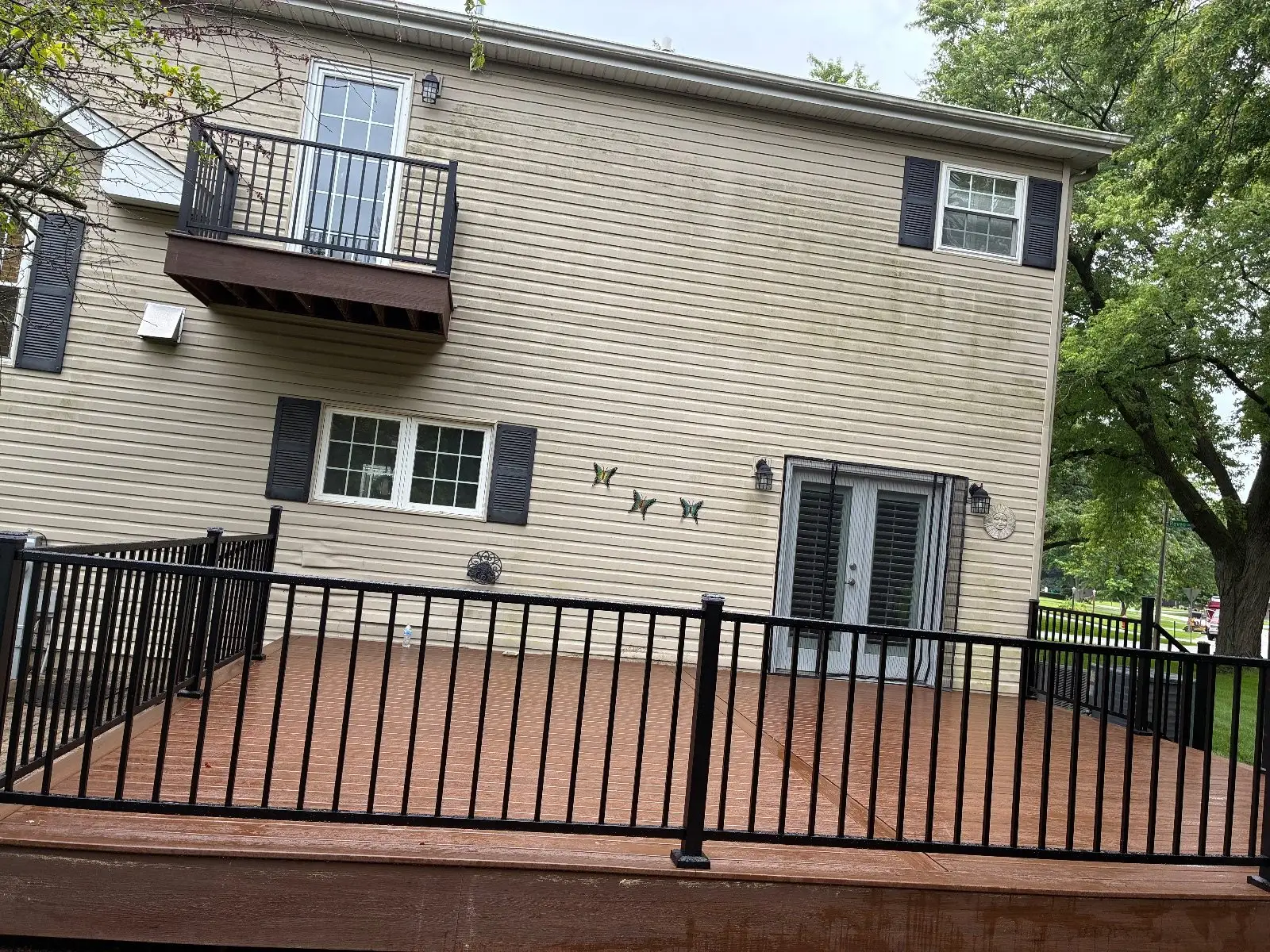
Finished brown composite deck with black aluminum railing on a two-storey Bloomingdale home

Quick answer

Railings are 15 to 25 percent of a deck's cost and the part everyone sees first. In Illinois any deck 30 inches or more above grade needs a guard at least 36 inches tall with openings under 4 inches. Every railing below is on a deck we built, most of them in 2026, with the town named where our crew recorded the job. Black aluminum is the one we install most; white composite suits traditional houses; cable gives the widest view; and a low deck can skip the railing entirely.

Catalogue photos make every railing look good. A railing on a real deck, against real siding, in a real DuPage County backyard, tells you more. Everything on this page is our work. Where the town is named, it is because our crew logged the address on the job; where it says DuPage County, we have the photo but not the street.

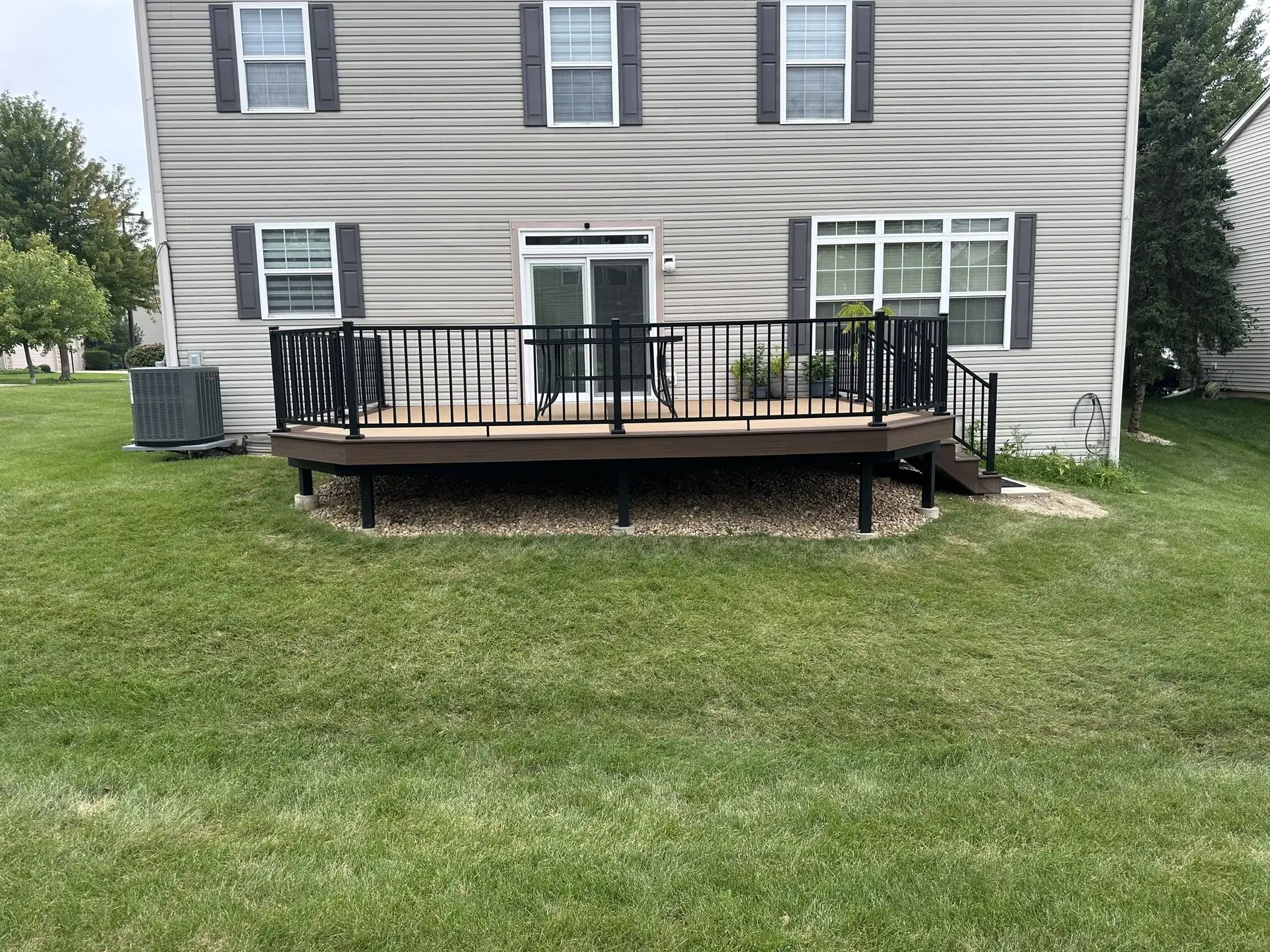
Black aluminum balusters on a brown deck
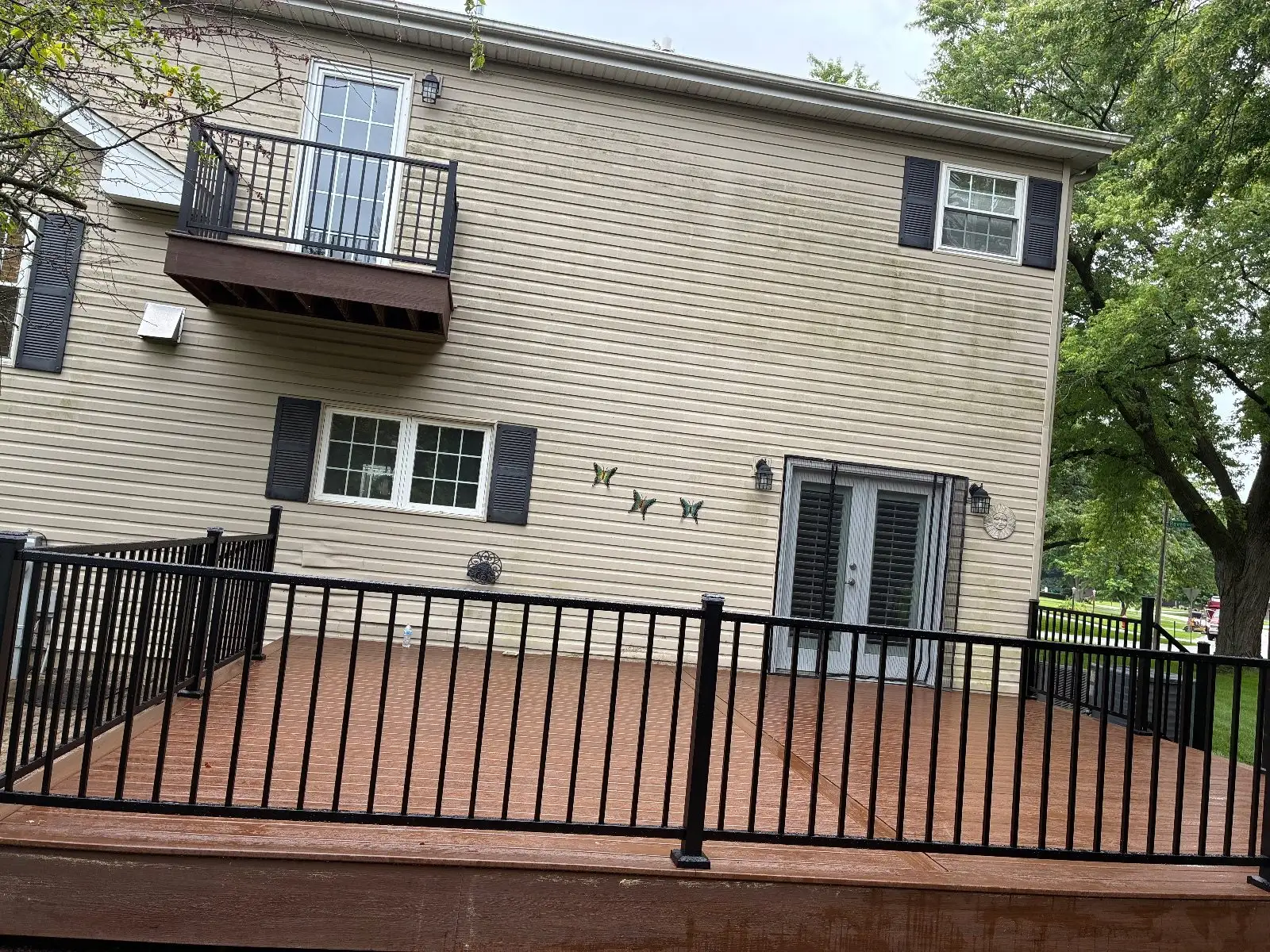
Finished brown composite deck with black aluminum railing on a two-storey Bloomingdale home
Bloomingdale, June 2026. See the whole job

This is the combination we install most often. Powder-coated black aluminum, slim balusters, a flat top rail. On a brown composite board it reads like a frame around the deck rather than a fence, and from inside the house the bars nearly vanish against the lawn.

The posts went in through the frame before the boards, so they are tied to the structure. No wobble, no paint, no upkeep.

Black aluminum on a tan board, high off the ground
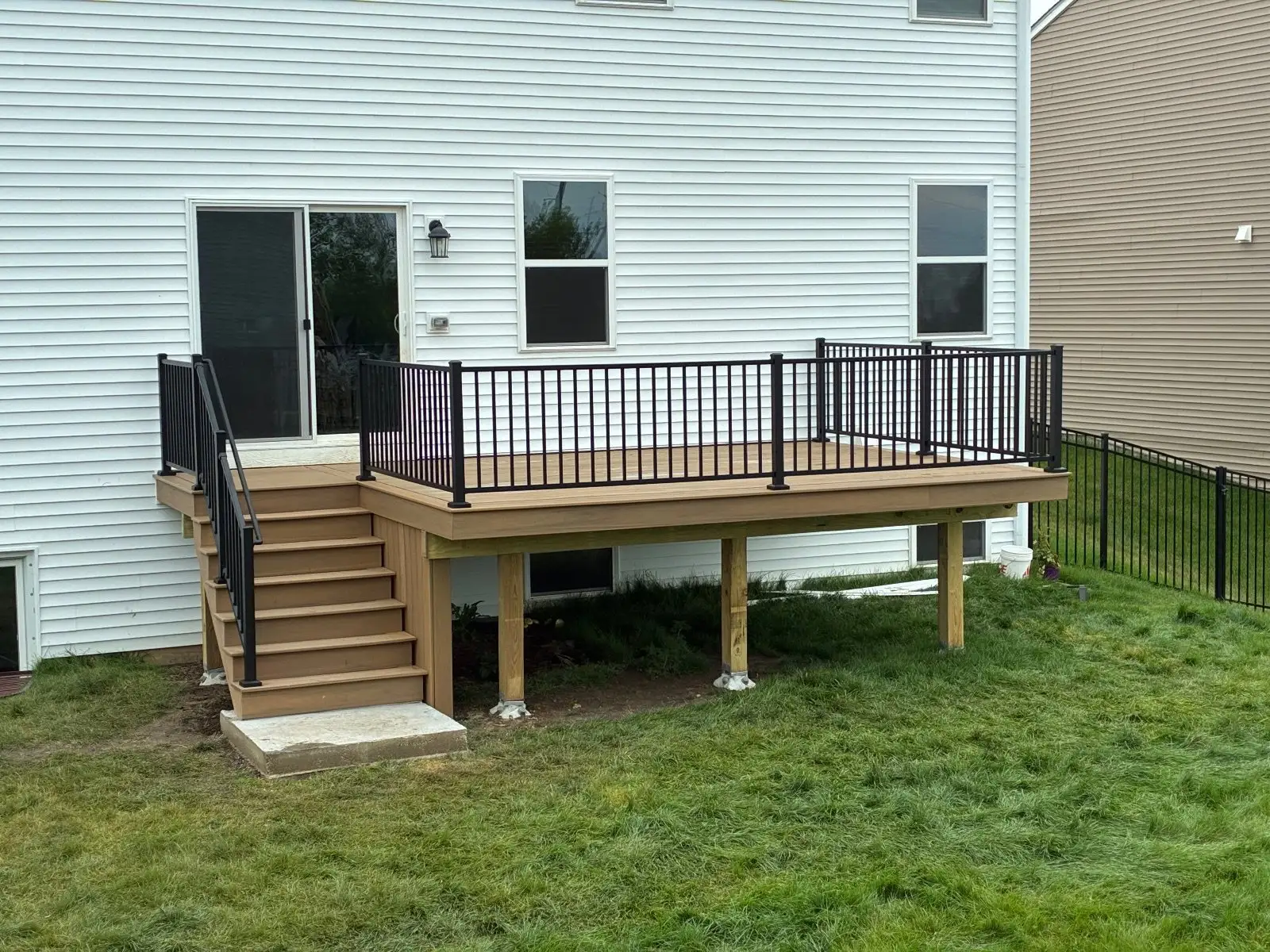
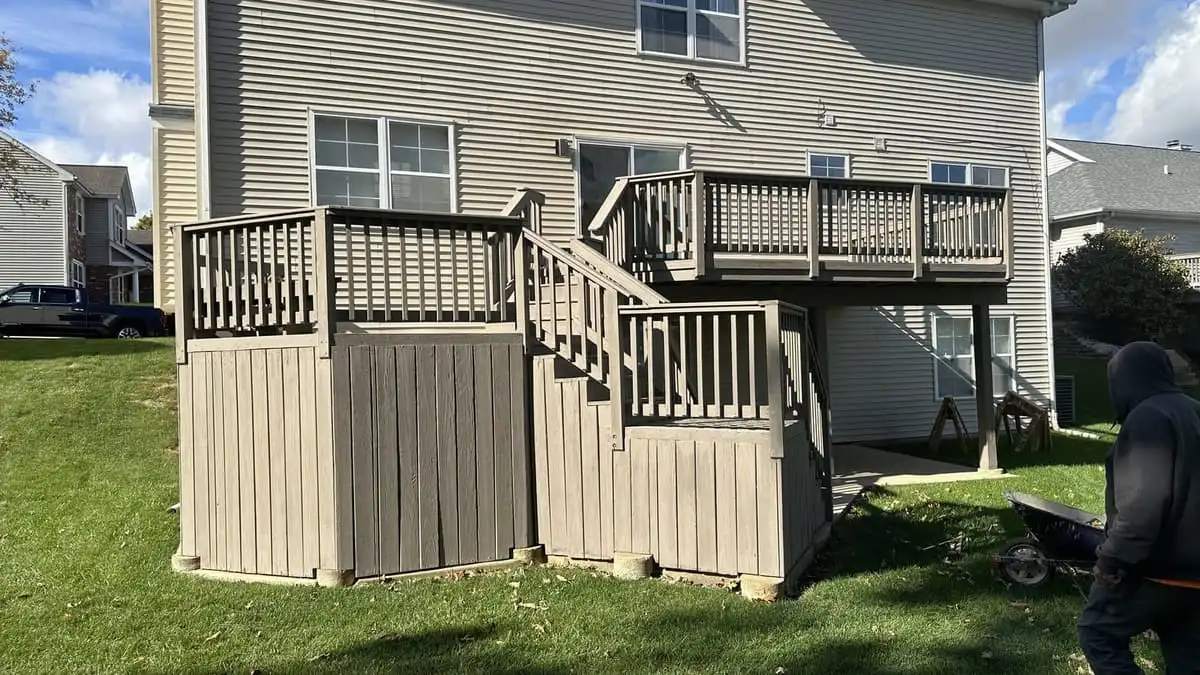
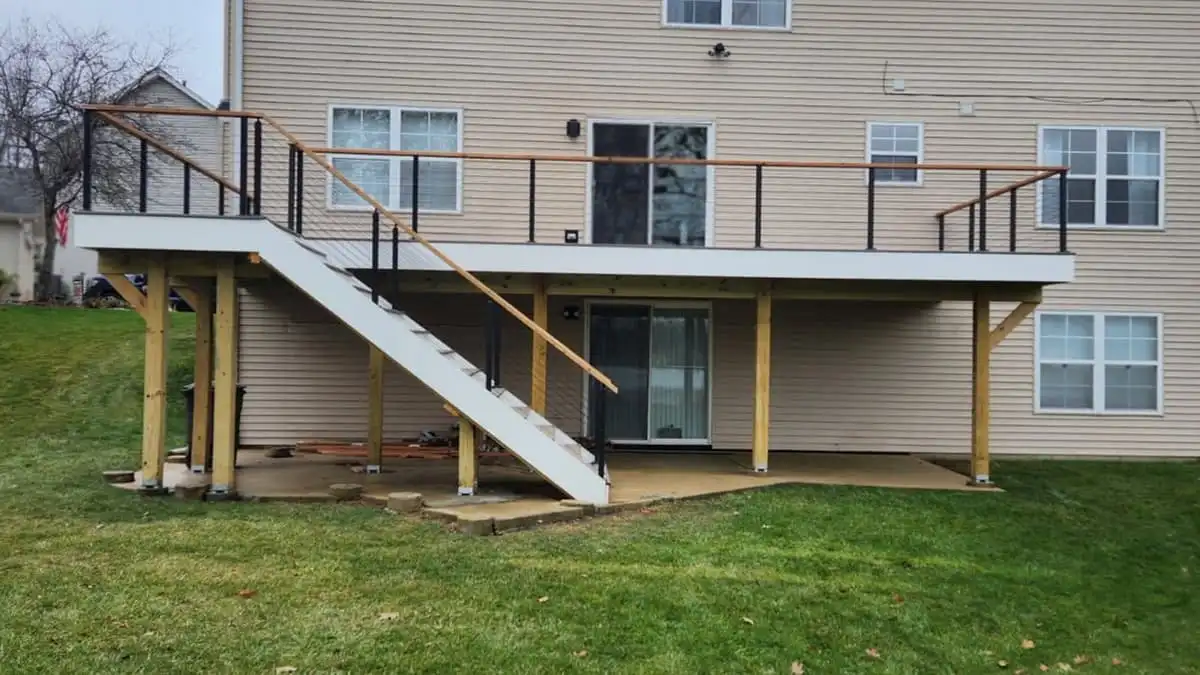
TimberTech Coconut Husk deck with black Trex Select railing and stairs down to a concrete pad in South Elgin
South Elgin, June 2026. See the whole job

Same railing, different board, and a deck that sits a full floor above the yard. The tan TimberTech board keeps the surface cooler in full sun, and the black railing gives the edge a clean line you can see from the pond behind the house.

On an elevated deck the railing is also the thing that makes the stairs feel safe. This one runs down the side to a concrete pad with a matching stair rail.

White composite railing on a grey deck
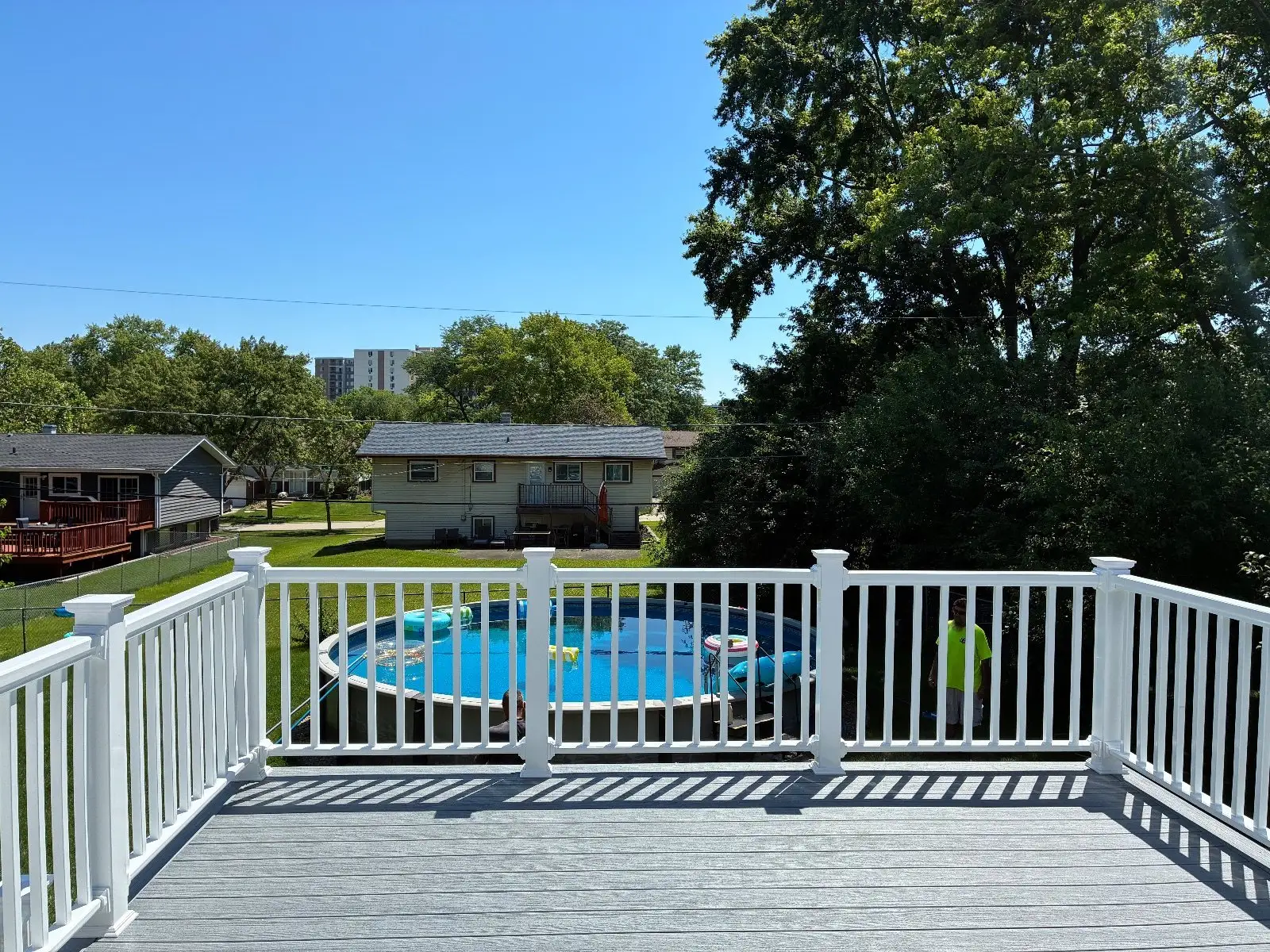
Grey Trex Foggy Wharf deck boards and white railing looking out over an above-ground pool
Hoffman Estates, July 2026. See the whole job

Trex Select railing in white, on a grey Trex Foggy Wharf deck, around an above-ground pool. White composite railing is chunkier than aluminum and it suits a traditional house: the square balusters and wide top rail look like painted wood without ever needing paint.

It is also the railing to pick when the deck faces the neighbours. White reads as finished from thirty feet away.

A white stair railing that matches the deck
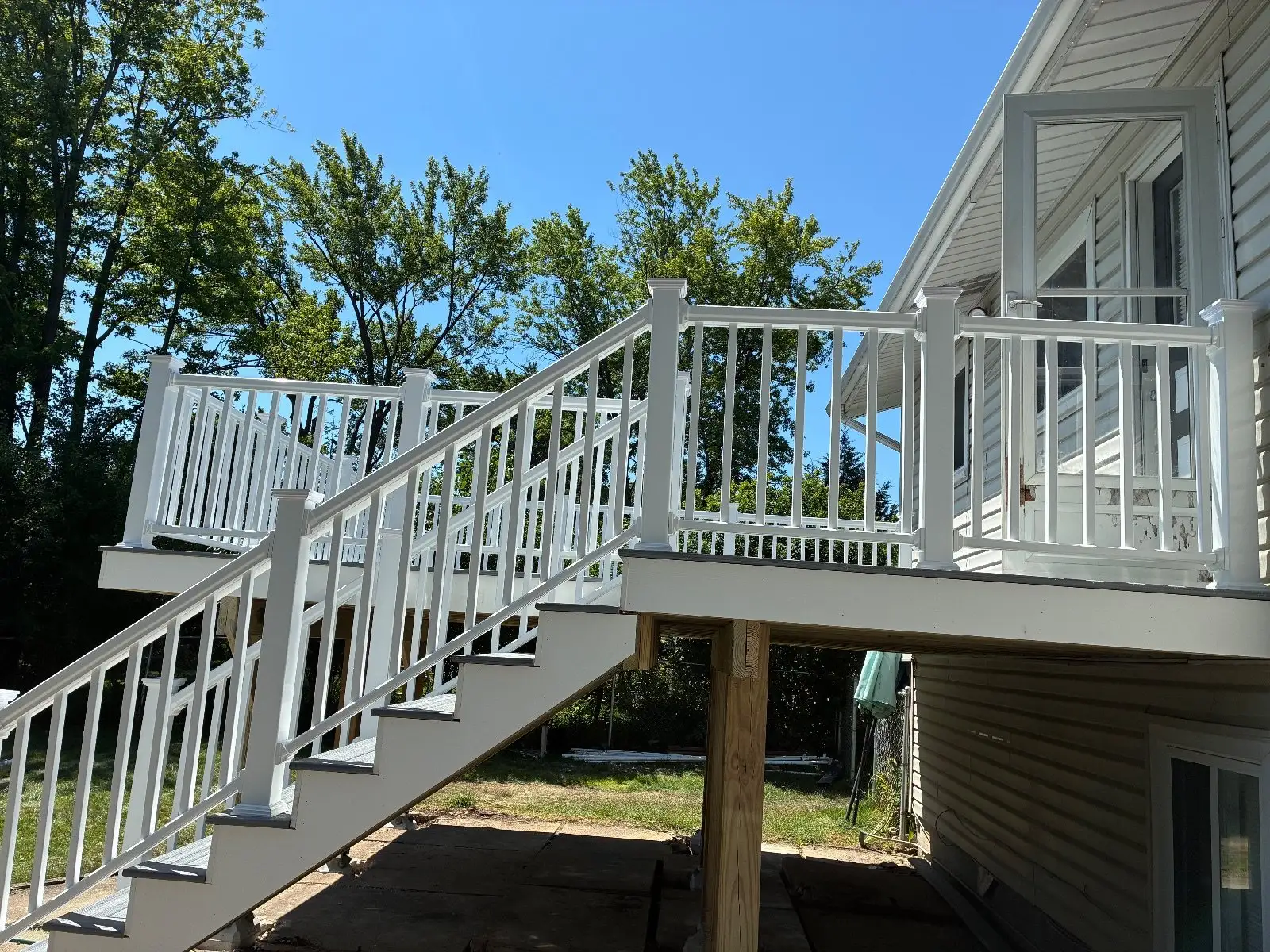
White Trex Select stair railing climbing to a new grey composite deck on 6x6 posts
Hoffman Estates, July 2026. See the whole job

Stairs are where railing rules get strict: any stair with 4 or more risers needs a guard, the handrail has to return to the post, and risers and treads have to match each other. This run lands on the patio slab instead of the grass, so the bottom step stays level.

If you are replacing a deck, this is the moment to add a proper stair run. Doing it later means new footings for the landing.

Two-tone: white posts, black balusters
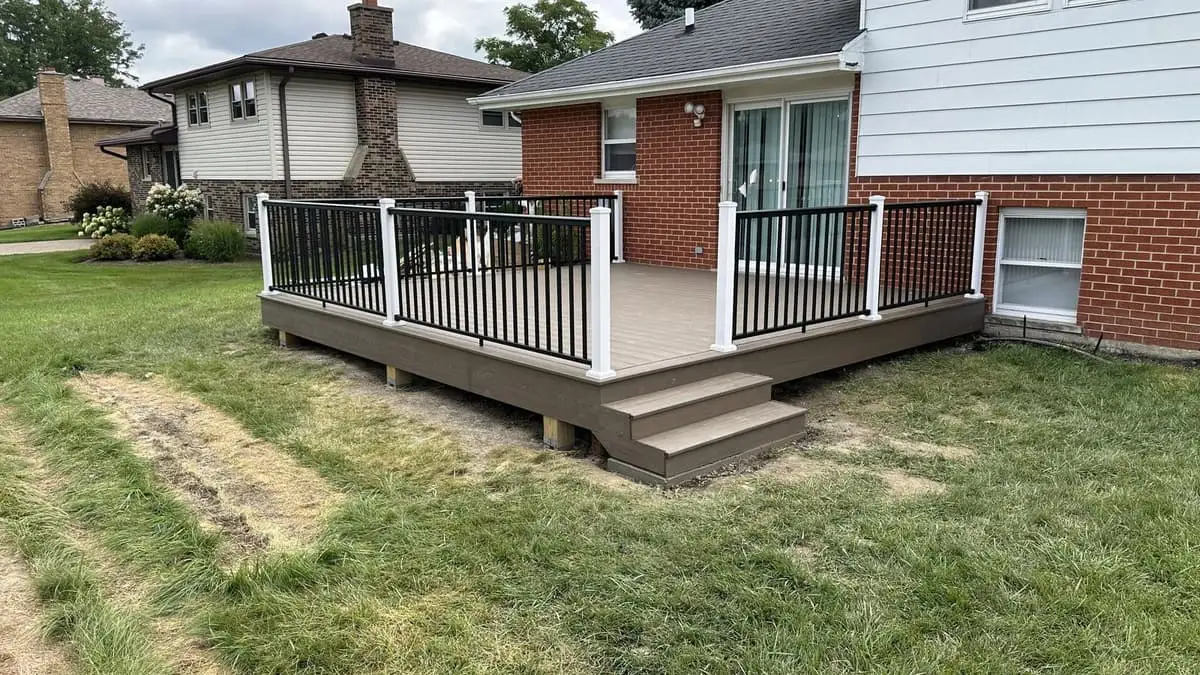
The same Hanover Park deck rebuilt in warm composite with white posts and black railings
Hanover Park. See the whole job

White posts tie the railing to the house trim; black balusters keep the view open. It is a small decision that makes the deck look designed rather than ordered from a catalogue, and it costs about the same as a single colour.

Bronze aluminum on an elevated composite deck
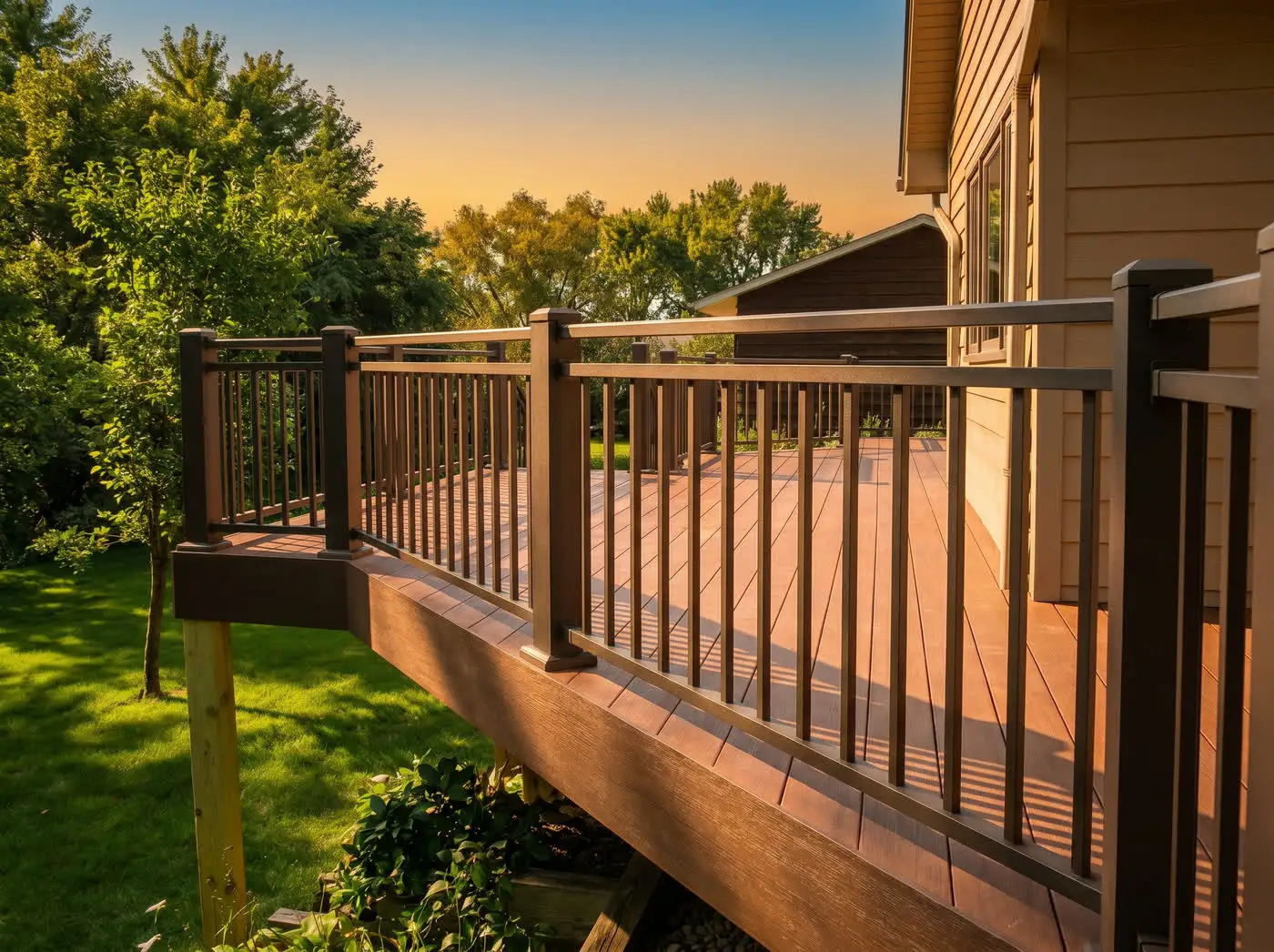
Bronze aluminum deck railing with black balusters running along an elevated composite deck at sunset
DuPage County. One of ours.

Bronze is the quiet alternative to black. It warms up a brown board and disappears against brick or tan siding. Same aluminum system, same no-upkeep finish, a different powder coat.

Cable infill for the most open view
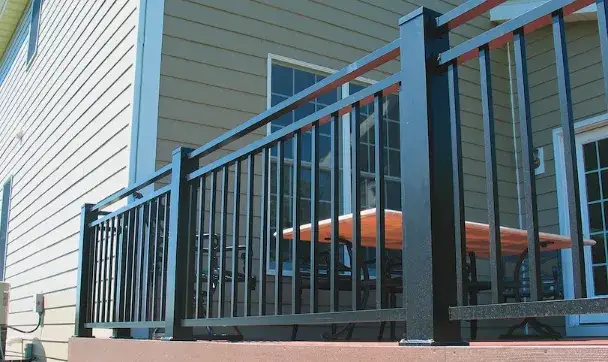
Close-up of a black aluminum railing with horizontal cable infill on a grey composite deck
DuPage County. One of ours.

Stainless cable runs horizontally between aluminum posts. It gives the clearest sight line of any system and reads modern. It costs more than balusters and the cables want an occasional re-tension, so we suggest it where the view is the point: a yard that backs onto a preserve, a pond or open ground.

No railing at all
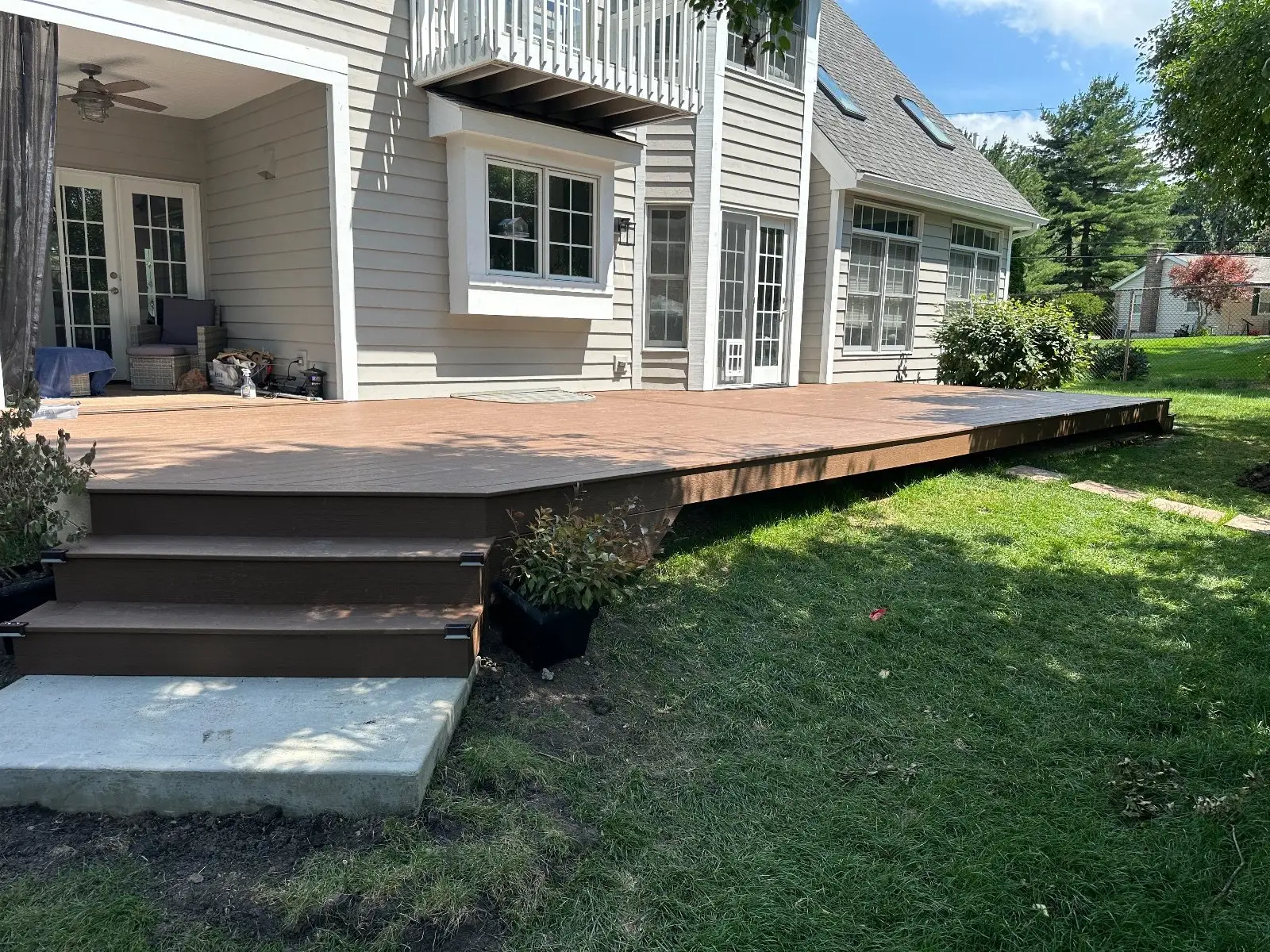
The whole 42 foot deck run from the yard with both step-downs and the balcony above
Lisle, June 2026. See the whole job

A deck under 30 inches needs no guard, and sometimes the best railing idea is none. This 42 by 12 Trex deck sits close to grade along its whole length, steps down twice onto concrete landings, and keeps the view from the house wide open. No railing is also the single biggest saving on a deck build.

Matching the railing to the board

Three pairings that keep showing up in our finished work, because they work:

  • Grey board, white railing. Cool and clean. Hides dust. The Hoffman Estates pool deck above.
  • Brown or tan board, black railing. Warm with a sharp edge. Bloomingdale and South Elgin above.
  • Any board, bronze railing. The soft option when black feels too hard against brick or tan siding.

Whatever you pick, the railing has to clear the village inspection: 36 inches minimum on a deck 30 inches or more above grade, nothing a 4 inch sphere can pass through, guards on stairs with 4 or more risers, handrails that return. We build to those numbers on every job. The deck railing installation page covers the systems and the process, and the composite decking page covers the boards they sit on. Ready to see the samples in your own yard? Get a free estimate.
Want a real number for your yard?

Ranges are for budgeting. A written price takes one visit, costs nothing, and comes with no pressure.

What this looks like in practice

Guides are easier to judge against real work. Drag the handle on either of these.

Before After An old wood deck before RR rebuilt it The same deck after RR rebuilt it

A tired stained-wood deck torn out and rebuilt in warm composite with black aluminum railings and angled corners.

Before After Old wood deck in Hoffman Estates, Illinois before RR rebuilt it The same Hoffman Estates deck after RR rebuilt it

Hoffman Estates, IL. A weathered raised deck rebuilt with composite decking and modern black railings.

See every project in the full gallery

Common questions

What is the most popular deck railing right now?

Black aluminum balusters. It is the railing we install most, because it does not rot, rust or need paint, the slim bars disappear against a yard, and it works on grey, brown and tan boards alike. Three of the five 2026 decks on this page have it.

How tall does a deck railing have to be in Illinois?

Any deck 30 inches or more above grade needs a guard at least 36 inches tall, with openings small enough that a 4 inch sphere cannot pass through. Stairs with 4 or more risers need a guard too, and the handrail has to return to the post. Villages inspect for all of it.

How much do deck railings cost?

Railings are usually 15 to 25 percent of a deck. Wood is cheapest, powder-coated aluminum sits in the middle and lasts, and cable costs the most. On a 16 by 20 composite deck that is roughly $2,500 to $7,000 of a $17,600 to $28,800 build. We price the railing as its own line so you can see it.

Can I skip the railing?

Yes, if the deck surface sits under 30 inches above the ground. The 42 foot Lisle deck on this page has no railing at all, which kept the view open and the price down. Above 30 inches a guard is code, not a choice.

Can you replace just the railings on my deck?

Yes. If the boards and frame are sound, a railing swap is a few days of work and changes the look of the deck more than anything else. See the deck railing installation page for how it runs.

Do railings come in colours other than black and white?

Yes. Bronze aluminum is common and warms up a brown deck. Composite railing comes in white and charcoal, and cable systems use stainless cable in a black or bronze frame. We bring the samples to the estimate so you see them against your siding.