The short version
Deck pricing confuses people because two decks of the same size can differ by ten thousand dollars. Square footage is only one input. The bigger ones are how high the deck sits, how many stairs it needs, and what you put on top.
Everything below is a typical installed range for DuPage County and the northwest suburbs in 2026. It includes labor, code-depth footings, a pressure-treated frame, railings and the permit. It is a budgeting tool and not a quote.
Cost per square foot by material
| Material | Installed per sq ft | Upkeep | Typical life |
|---|---|---|---|
| Pressure-treated pine | $30 to $45 | Clean and re-coat every 2 to 4 years | 15 to 20 years |
| Cedar | $40 to $60 | Clean and re-coat every 2 to 4 years | 15 to 20 years |
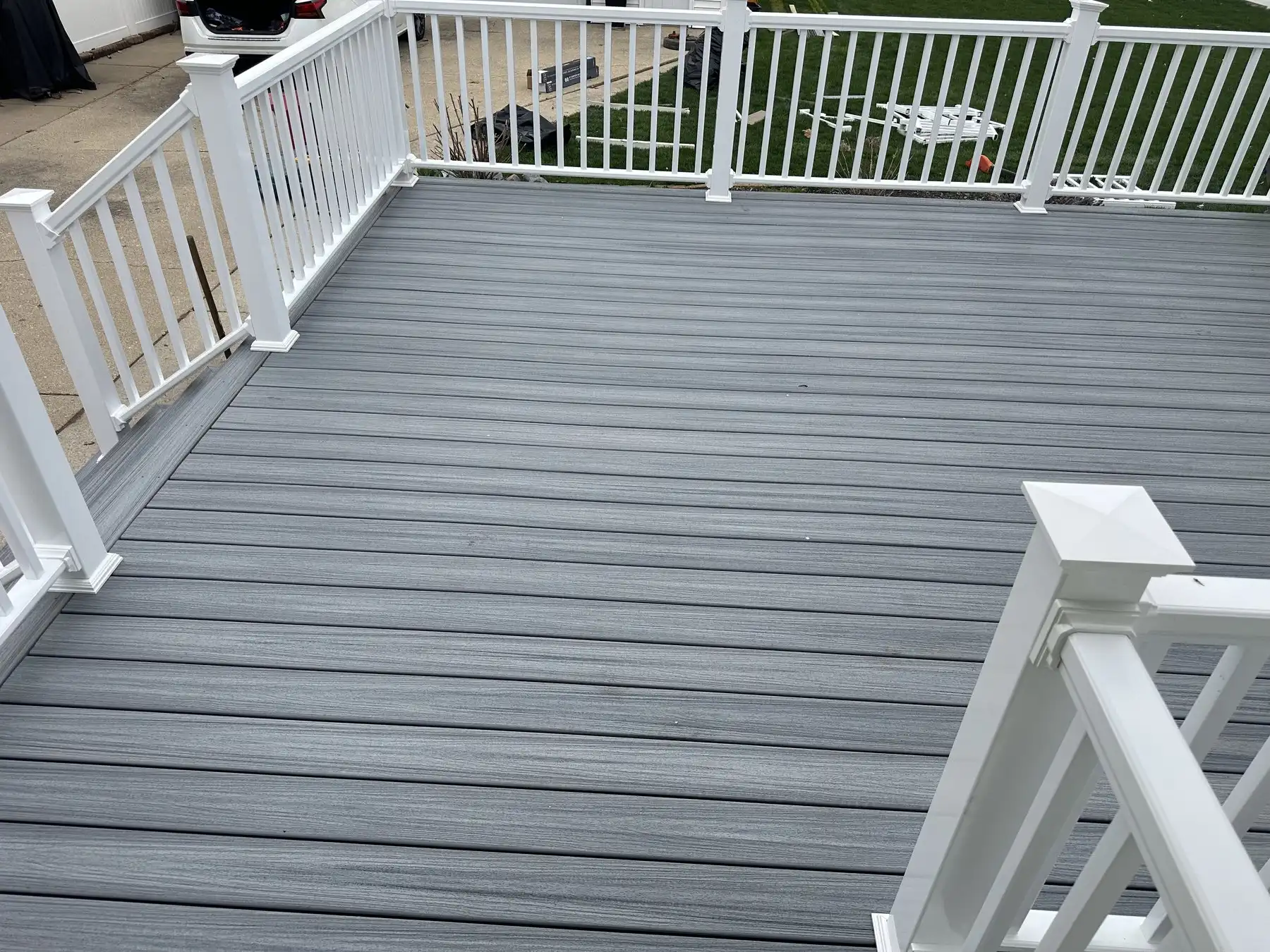
| Capped composite | $55 to $80 | Wash only | 25 to 50 year warranty |
| PVC (Azek and similar) | $65 to $90 | Wash only | 25 to 50 year warranty |
Composite looks expensive on this table and cheaper on a fifteen-year one. Wood costs less to build and asks for a weekend and a few hundred dollars in stain every few years. Neither is wrong. It depends how long you are staying and how you feel about maintenance. We go through the trade properly in our composite vs wood comparison.
Cost by deck size
| Size | Sq ft | Pressure-treated | Cedar | Composite |
|---|---|---|---|---|
| 10 x 12 | 120 | $3,600 to $5,400 | $4,800 to $7,200 | $6,600 to $10,800 |
| 12 x 16 | 192 | $5,800 to $8,600 | $7,700 to $11,500 | $10,600 to $17,300 |
| 16 x 20 | 320 | $9,600 to $14,400 | $12,800 to $19,200 | $17,600 to $28,800 |
| 20 x 24 | 480 | $14,400 to $21,600 | $19,200 to $28,800 | $26,400 to $43,200 |
What actually drives the price
1. Height off the ground
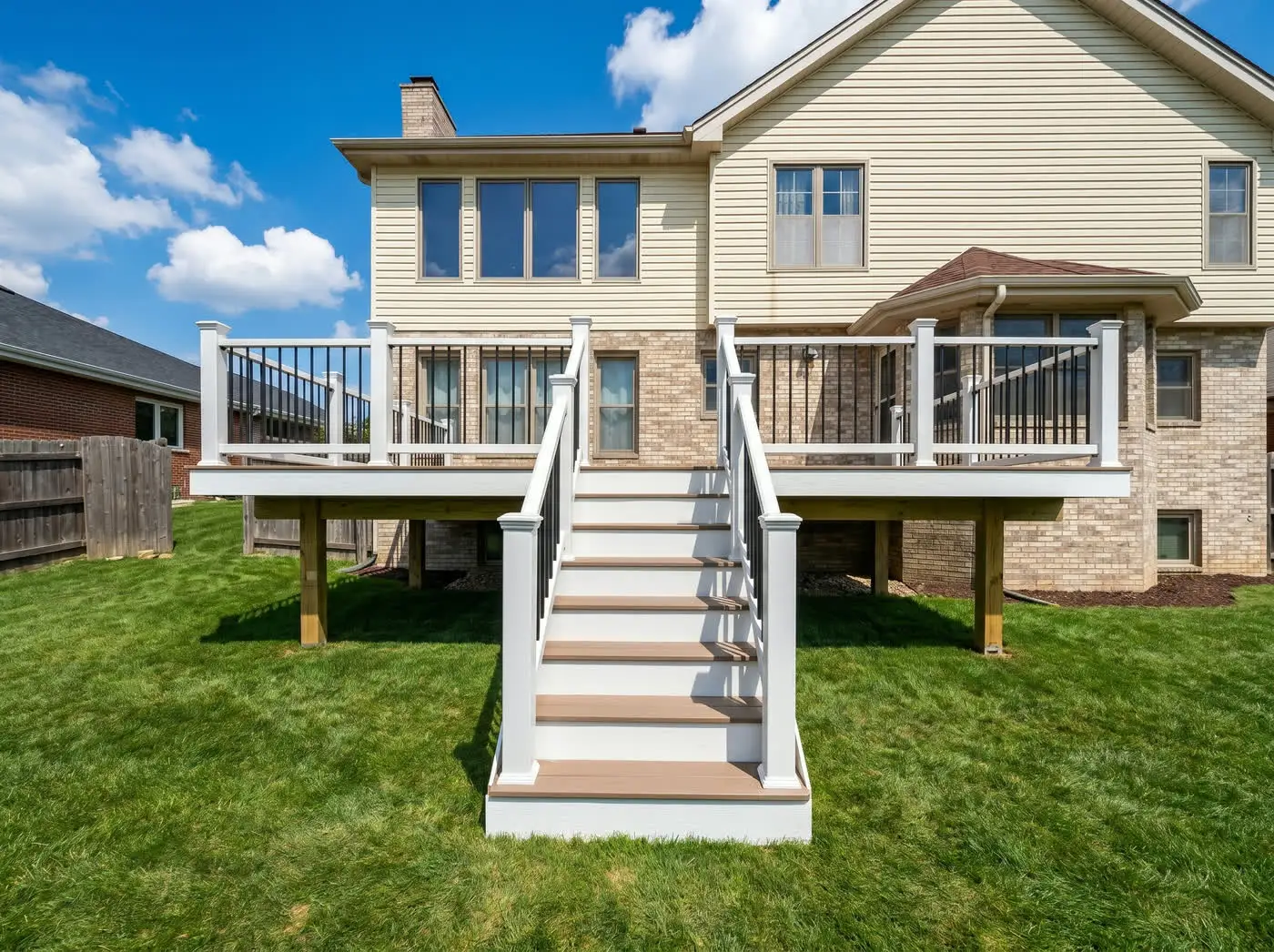
This is the biggest hidden multiplier. A deck twelve inches up and a deck eight feet up are not the same build with longer posts. Height increases the load on every footing and adds lateral force the frame has to resist, so footings get larger, beams get heavier, and bracing and hardware get added. It also forces a code-compliant railing and a real stair run.
2. Stairs
Stairs are the single most underestimated line. Every stair section needs its own stringers, posts, footings at the landing, and angled railing cuts. A long run down from an elevated deck can add thousands on its own. If you are pricing options, ask how many stair runs each quote includes.
3. Railings
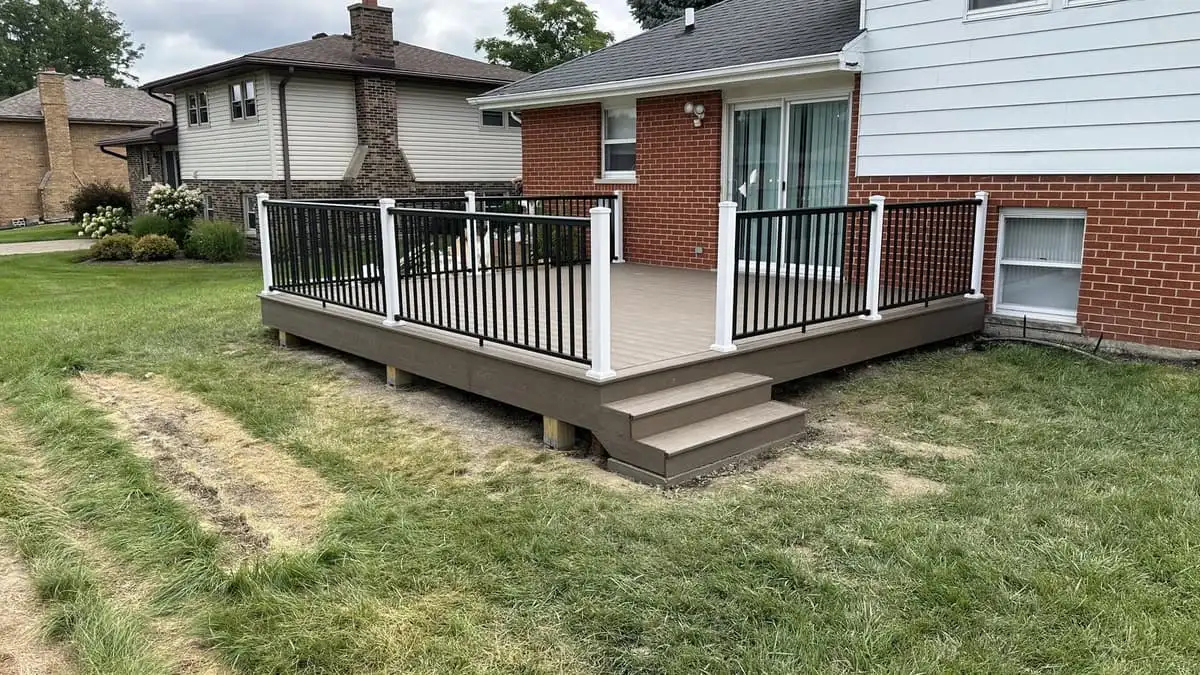
Railings are usually 15 to 25 percent of a deck's cost, and they are the part everyone sees from the yard. Wood is cheapest, powder-coated aluminum sits in the middle and lasts indefinitely, and cable costs the most. See deck railing options for the trade-offs.
4. Shape and site conditions
Every corner is labor. Angled and curved decks cost more than rectangles for the same square footage. So do sloped yards, poor access for equipment, tree roots, and utility easements that shift where footings can go.
What a replacement adds
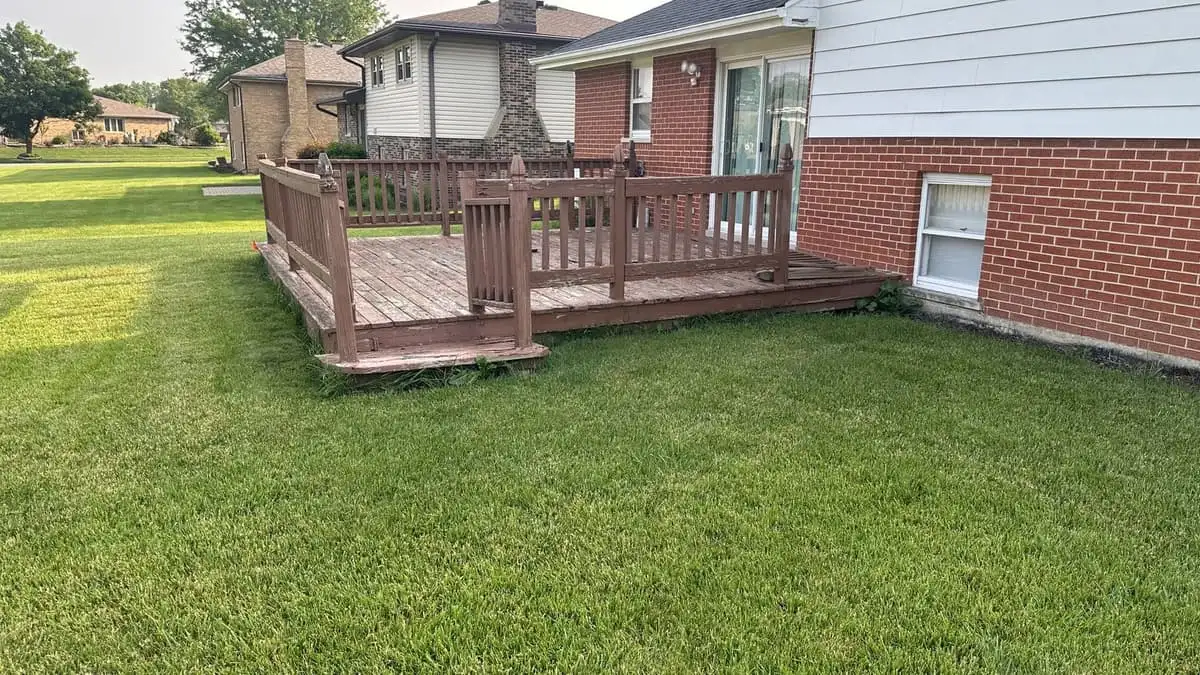
If there is an existing deck, budget for demolition, a dumpster and disposal on top of the build. That is usually a one-day stage and it should be itemized rather than hidden.
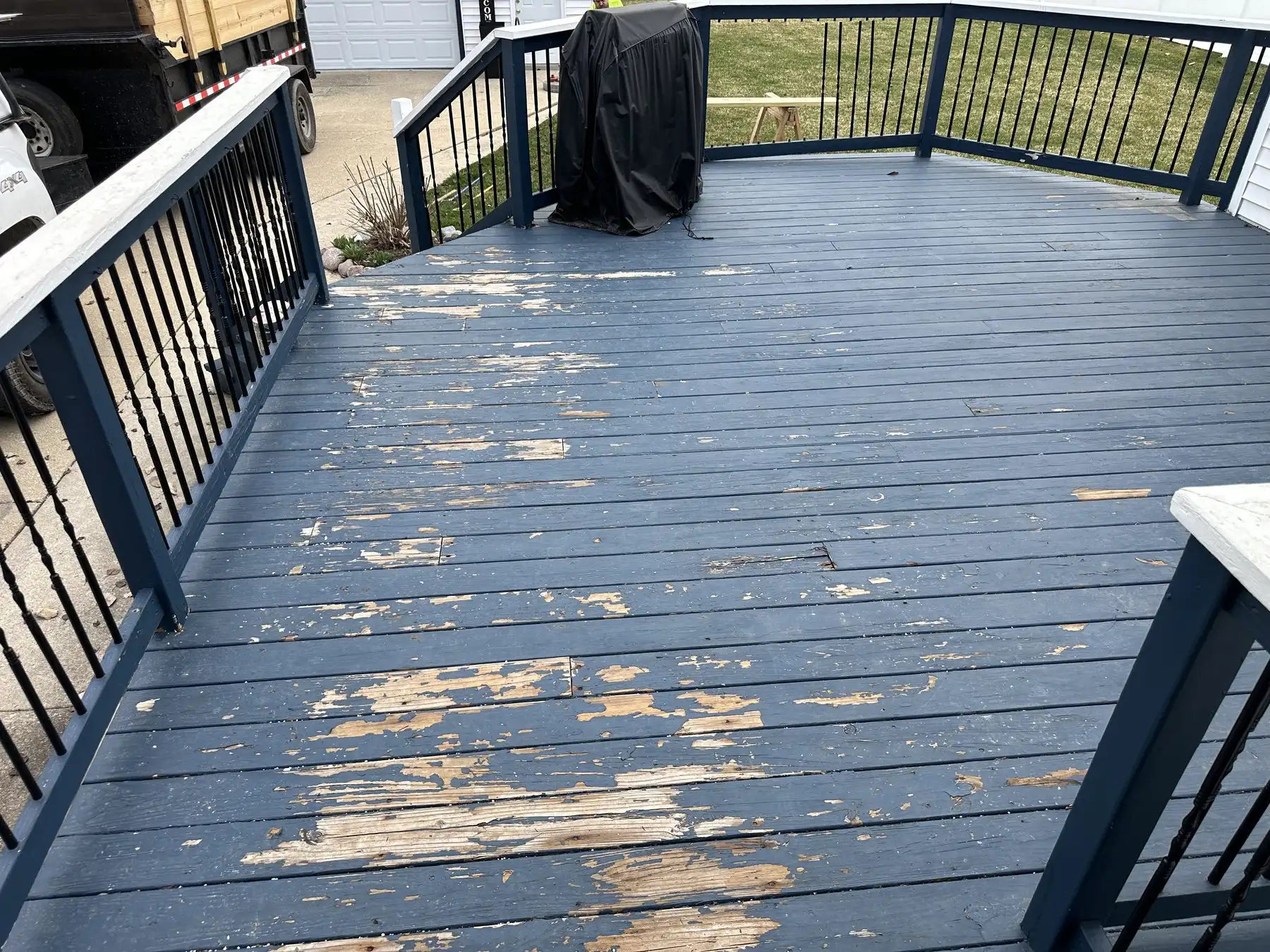
Before you assume you need a full deck replacement, check the frame. If the posts are firm and the deck does not move when you walk it, you may only need re-decking, which costs considerably less because nobody is digging new footings.
Where cheap quotes hide the money
Six things to check on every quote before you compare the totals.
- Footing depth. Below the frost line, at the depth your village requires. This is the one nobody should cut.
- Joist spacing. Composite needs tighter spacing than wood. Wide spacing under composite means a bouncy deck.
- Railings and stairs. Included, or a change order later?
- Permit. Pulled by the contractor, or left to you?
- Demolition and haul-away. On a replacement, is it in the number?
- Ledger flashing. How the deck attaches to the house. Bad flashing rots the house, not just the deck.
Permits and inspections
Every village in DuPage County and northwest Cook requires a permit for a new deck, and most require one for a full replacement. Permit fees are typically a modest part of the total, but the wait is often the longest single item in the schedule. Our deck permit guide covers how each town handles it.
How to bring the number down
- Stay low. Keeping the deck close to grade cuts footing, framing, railing and stair cost all at once.
- Cut a stair run. One set of stairs instead of two is a real saving.
- Change material, not size. Going from composite to cedar usually saves more than shrinking the deck by a third, and you keep the space.
- Keep the shape simple. Rectangles are cheap. Angles are labor.
- Build in the off season. Late fall and winter scheduling is easier than the March through May rush.
A note on how we price
We do not publish a single number because we cannot see your yard from here. What we can do is come out, measure, look underneath if there is an existing deck, and leave you a written price with the line items shown. It costs nothing and there is no pressure. We are family owned, based in Roselle, and we build across DuPage County and the northwest suburbs.